THE TRUTH NOBODY TELLS YOU
Here’s what your well-meaning friends don’t understand when they tell you to “just move on”: your brain is literally in withdrawal. Neuroscientist Helen Fisher’s fMRI research at Rutgers showed that the brain of someone going through a breakup lights up in the same regions as someone withdrawing from cocaine — the ventral tegmental area, the nucleus accumbens, the whole dopamine reward system screaming for a hit of a person who isn’t coming back.
That’s why you can’t stop checking their profile. That’s why your chest tightens every time your phone buzzes and it isn’t them. That’s why you’re lying awake at 3am rehearsing what you should have said, what you could still say, what would happen if you just sent one more text. It’s not obsession. It’s neurochemistry.
Researchers at Columbia University found that social rejection activates the secondary somatosensory cortex and the dorsal posterior insula — the same brain regions involved in processing physical pain. Your heartbreak isn’t metaphorical. The pain is registering in your body like a burn or a blow. And the anxiety that wraps around it? According to the American Psychological Association, that’s your brain’s threat-detection system doing exactly what it evolved to do — it’s scanning for danger because losing a bonded partner was genuinely life-threatening for most of human history.
So no, you’re not being dramatic. You’re not “too sensitive.” You’re having a documented neurological response to one of the most painful experiences a human can go through. The question isn’t whether the anxiety is real — it’s what you do with it.

THE FOUR SPIRALS
Post-breakup anxiety doesn’t show up as one thing. It fractures into different loops, each feeding the others. Recognizing which spiral you’re caught in is the first step toward interrupting it.
The replaying. The analyzing. “Was it that thing I said in March?” “If I’d just been more patient…” You go over the same memories like a detective looking for a clue that’ll make it all make sense. But the loop never closes — it just tightens. Your brain mistakes rumination for problem-solving, so it feels productive even though it’s keeping you stuck in the worst moments on repeat.
“Am I unlovable?” “Was I too much, or not enough?” This is the spiral that goes deepest because it predates the relationship. The breakup cracked open something older — the fear that you’re fundamentally flawed, that anyone who gets close enough will eventually leave. Every quiet night alone feels like evidence for the prosecution.
“Will I be alone forever?” “Everyone my age is married.” “I wasted my best years.” The future stretches ahead like an empty road, and your anxious brain fills it with worst-case scenarios. Here’s what’s counterintuitive: this fear is often strongest in people who were actually unhappy in the relationship. You’re not mourning what you had — you’re terrified of the unknown.
Your social world shrank inside the relationship, and now you’re supposed to rebuild it while running on no sleep, zero confidence, and a nervous system that flinches at vulnerability. Going out feels exhausting. Staying home feels pathetic. And explaining the breakup to acquaintances one more time makes you want to disappear completely.
HOW STUMBLE HELPS
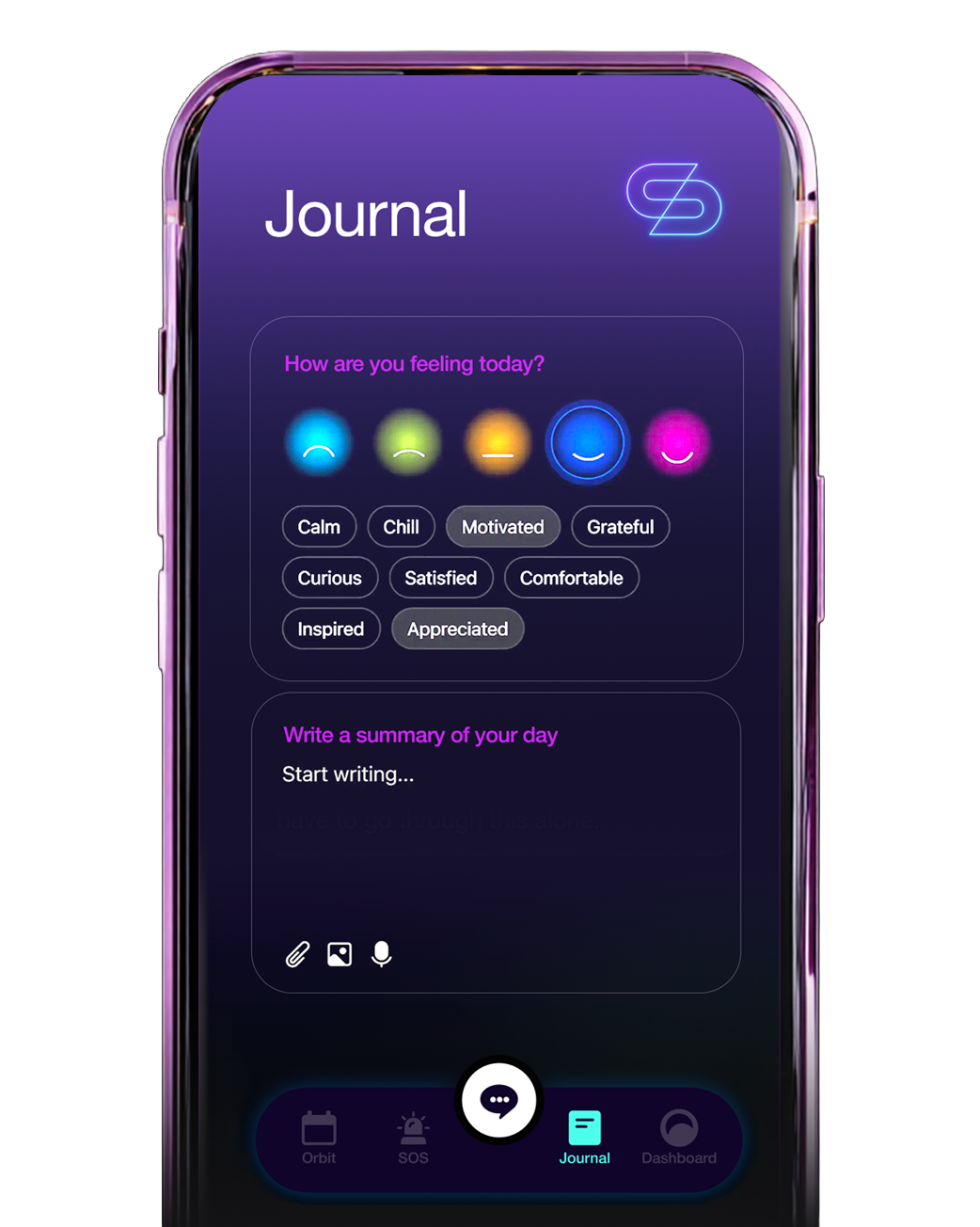
Stumble was built by people who’ve been in the spiral, not people studying it from the outside. Every feature exists because someone was awake at 3am and needed something gentler than a crisis line but more helpful than doomscrolling their ex’s tagged photos.
For rumination: Our guided journaling prompts don’t just ask “how do you feel?” — they interrupt the loop. Prompts like “Write the version of today where you’re the hero, not the victim” or “What would you tell your best friend if they were replaying this same scene?” redirect your thinking from circular analysis to actual insight. Getting the words out of your head and onto a screen breaks the echo chamber effect that makes rumination so addictive.
For attachment anxiety: The anonymous community is full of people who felt exactly as broken as you do right now — and came out the other side. Reading their stories doesn’t just help intellectually; it rewires the narrative. You’re not the only one who felt unlovable at 2am. You’re not the only one who googled “will I ever be happy again” and felt ridiculous about it afterward.
For future anxiety: Daily mood tracking does something your anxious brain refuses to do: it tells the truth about your trajectory. When you’re deep in it, every bad day feels like proof you’re not getting better. But when you look at a 30-day mood chart and see the line slowly trending upward — even with dips — that’s evidence your anxiety can’t argue with.
For social anxiety: Stumble’s community is completely anonymous. No profile photos, no mutual friends, no one who’ll bring it up at brunch. It’s the lowest-stakes way to ease back into trusting people — to practice being vulnerable without the terror of being recognized. Think of it as physical therapy for your social confidence.
YOUR TOOLKIT
Four tools, one pocket. Each one addresses a different piece of what makes breakup anxiety so relentless.
Prompts designed to break rumination loops and turn circular thinking into forward motion.
Thousands of people who get it, right now, without judgment or awkward follow-up questions.
Visual proof that you’re healing — even on the days that don’t feel like it.
A judgment-free listener available at 3am when you need to process something but can’t call anyone.
GETTING STARTED
Takes about 90 seconds. You’ll do your first mood check-in — no account setup, no profile building, no explaining your situation to anyone. Just you and an honest answer about how you’re actually doing right now.
Need to get words out of your head? Open a journal prompt. Feeling alone? Browse the anonymous community. Can’t sleep and need to process something? Talk to the AI companion. There’s no “right” way to use Stumble. Whatever you need at that moment, it’s there.
After a week or two of daily check-ins, your mood chart starts telling a story your anxiety doesn’t want you to hear: you’re getting better. Slowly, unevenly, with setbacks — but the trend is there. And seeing it in data, not just feeling it, changes everything.


“I’d been staring at our old texts for three weeks straight when I found Stumble. The first journaling prompt asked me to write a letter to myself six months from now. I ugly-cried through the whole thing but something shifted. I stopped rereading the texts that night. Not forever — but that night was enough.”
— Maya, 28, 4 months post-breakup
“My anxiety was so bad I’d check if she was online every ten minutes. I knew it was making things worse but I couldn’t stop. Someone in the Stumble community said ‘checking is just your brain trying to keep the connection alive — it doesn’t mean you’re crazy.’ That one sentence helped more than six weeks of friends telling me to delete her number.”
— Daniel, 31, navigating his first breakup in 5 years
“The mood tracking was the thing that saved me. At week three I was convinced I was getting worse. Then I looked at my chart and I could actually see the bad days getting shorter. The lows weren’t as low. It wasn’t dramatic, but it was undeniable. My anxiety couldn’t argue with a graph.”
— Priya, 26, used Stumble for 3 monthsYOUR FIRST 30 DAYS
Nobody heals in a straight line. Here’s an honest map of what most Stumble members experience — the messy, non-linear, surprisingly hopeful version.
You download the app, probably at 2am because you can’t sleep. You do your first mood check-in and it feels almost embarrassing to admit how low it is. But you read a few posts in the community and something unclenches slightly. You’re not the only one awake right now.
You start journaling regularly — not perfectly, just honestly. Some days it’s three sentences. Some days it’s a furious two-page rant about something they said in August. The anxiety doesn’t disappear, but it starts having somewhere to go instead of just looping inside your skull.
[ { "@context": "https://schema.org", "@type": "WebPage", "name": "Anxiety After a Breakup: How to Calm the Spiral and Actually Start Healing", "url": "https://www.joinstumble.com/anxiety-after-breakup/" }, { "@context": "https://schema.org", "@type": "SoftwareApplication", "name": "Stumble", "description": "Emotional support app for heartbreak, loneliness, and life transitions", "applicationCategory": "HealthApplication", "operatingSystem": "iOS, Android, Web", "offers": { "@type": "Offer", "price": "0", "priceCurrency": "USD" }, "url": "https://joinstumble.com" }, { "@context": "https://schema.org", "@type": "BreadcrumbList", "itemListElement": [ { "@type": "ListItem", "position": 1, "name": "Home", "item": "https://joinstumble.com" }, { "@type": "ListItem", "position": 2, "name": "Anxiety After a Breakup: How to Calm the Spiral and Actually Start Healing", "item": "https://www.joinstumble.com/anxiety-after-breakup/" } ] } ]

