THE TRUTH NO ONE SAYS OUT LOUD
Here’s something that will mess with your head: you can know someone was terrible for you and still miss them so badly your chest aches. You can recite every cruel thing they said and still scroll through your phone at 2am looking for the version of them that showed up on your second date — the one who made you feel like the center of the universe.
That’s not weakness. That’s trauma bonding — a well-documented neurological response to intermittent reinforcement. The cycle of cruelty and tenderness literally rewires your brain’s reward system the same way addiction does. Research on psychological trauma shows that these bonds can be more intense than attachments formed in healthy relationships. So no, you’re not crazy for missing someone who hurt you. Your nervous system is doing exactly what it was trained to do.
Then there’s the cognitive dissonance — holding two completely contradictory truths at the same time. “They were manipulative and emotionally abusive” and “I love them and I want them back.” Both are real. Both exist in you simultaneously. And most people in your life don’t understand how that works. They just want you to be angry. They want you to be done. They keep saying “you’re better off” as if your brain hasn’t already figured that out while your body refuses to cooperate.
And maybe the hardest part: you don’t fully remember who you were before them. Toxic relationships erode identity so gradually you don’t notice until you’re standing in the rubble wondering what you actually like, what you actually think, what your voice sounds like when nobody’s controlling the conversation. Judith Herman’s foundational work on trauma recovery identifies this identity erosion as one of the most devastating consequences of prolonged psychological abuse — and one of the slowest things to rebuild. This isn’t a standard breakup recovery situation. It’s deeper than that.


BUILT FOR THIS SPECIFIC KIND OF PAIN
Most breakup advice assumes you left a decent person and just need time. It tells you to delete their photos, hit the gym, get back out there. But recovering from a toxic relationship isn’t about getting over someone — it’s about getting back to yourself. It’s about relearning to trust your own perceptions after months or years of having them systematically dismantled.
Stumble was designed for exactly this. Not the “eat ice cream and watch romcoms” version of heartbreak. The version where you flinch when a new friend raises their voice slightly. Where you apologize for having opinions. Where you catch yourself rehearsing conversations in advance because you were punished for saying the wrong thing for so long that spontaneity feels dangerous.
Our anonymous community is full of people who don’t need you to explain what gaslighting feels like. They lived it. Our journaling prompts aren’t about “reflecting on happy memories” — they’re about recognizing patterns, rebuilding your internal compass, and finally giving yourself permission to trust what you saw and felt. And our AI companion is there at 3am when the longing hits like a truck and you need someone to gently remind you of why you left — without a single ounce of judgment.
YOUR RECOVERY TOOLKIT
Each one was built for the specific psychological aftermath of emotional abuse — not generic heartbreak.
Talk to people who escaped toxic relationships without having to explain what trauma bonding is or defend why you stayed. They already know.
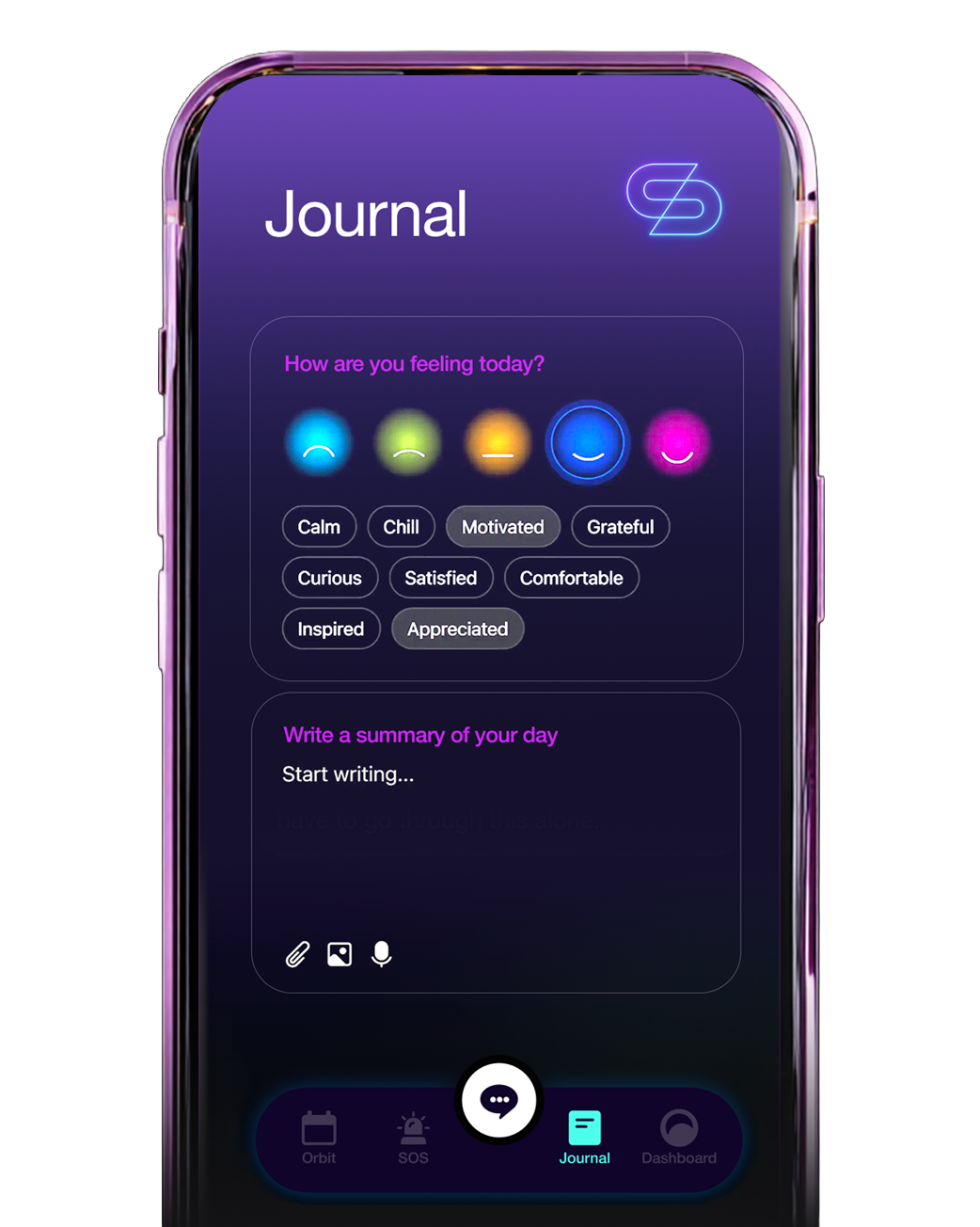
Prompts designed to rebuild self-trust. Identify the red flags you minimized. Separate their voice in your head from your own. See how it works.
Healing from trauma isn’t linear — you’ll have terrible weeks inside good months. Mood data helps you see the real trajectory underneath the noise.
When the longing blindsides you and you’re one text away from breaking no-contact. No judgment. Just steady, warm support exactly when your resolve is weakest.
SIMPLE TO START, EVEN WHEN EVERYTHING FEELS HARD
Stumble asks what you’re going through — not to categorize you, but to personalize everything that follows. Select “toxic or abusive relationship” and the app adjusts its prompts, community suggestions, and AI responses to match your specific experience.
Quick daily mood check-ins take seconds. Over time, you’ll see the data tell a story your feelings can’t — that you are getting better, even when it doesn’t feel like it. Especially on the days it doesn’t feel like it.
No pressure to start on day one. When you’re ready, guided prompts help you untangle the confusion. Things like: “Write about a moment you knew something was wrong but talked yourself out of it.” That kind of work rebuilds the self-trust that was stolen from you.
Share your story, read others’, or just lurk quietly and realize you’re not the only one who’s been through this. There’s something that shifts inside you when someone else describes exactly what you lived through and you think: they get it. That feeling — that’s where isolation starts to break.
Real words from real people recovering from toxic relationships on Stumble.

“I’d been rereading his apology texts on loop for a month, convincing myself the good version was the real him. Someone in the Stumble community wrote about the exact same pattern and called it what it was — intermittent reinforcement. I cried for an hour, then deleted the texts. That was my turning point.”
— Mara, 27
“Nobody tells you how confusing it is when a man goes through this. My friends kept saying ‘at least she was hot’ like that was supposed to help. Stumble was the first place I could say ‘my ex made me feel like I was losing my mind’ and not have to justify it or prove it. Just being believed was healing.”
— David, 34
“The mood tracking saved me. I thought I wasn’t getting better because I’d still have these crushing days. But after six weeks I could actually see the trend line going up. More okay days than awful ones. That data gave me hope when my feelings couldn’t.”
— Keely, 31YOUR FIRST 30 DAYS
Healing isn’t a straight line. Here’s a realistic map of the first month — the hard parts and the breakthroughs.
The Fog
You’re disoriented. Relief and grief crash into each other. You start mood check-ins and just lurk in the community. That’s enough.
The Anger Arrives
You start journaling. Old memories look different when you write them down honestly. Anger is good — it means the fog is lifting.
The Wobble
A setback. You miss them again. You almost reach out. The AI companion and community hold you steady through the wave. It passes.
The Glimpse
You notice something: a small opinion you voiced without rehearsing it first. A boundary you set. A moment you trusted your gut. That’s you, coming back.
A NOTE ON SAFETY
Stumble is built for people healing after leaving. If you’re still in a relationship where you feel unsafe, controlled, or afraid, please reach out to the National Domestic Violence Hotline at 1-800-799-7233 (call or text). They have trained advocates available 24/7 who can help you create a safety plan. If you need mental health or substance use support during this time, SAMHSA’s National Helpline offers free, confidential referrals around the clock.
You don’t need to have a dramatic exit story. You don’t need bruises that show. Emotional abuse is real, its effects are documented, and you deserve support whether you left yesterday or you’re still figuring out how. Stumble will be here whenever you’re ready.
 [
{
"@context": "https://schema.org",
"@type": "WebPage",
"name": "Recovering from a Toxic Relationship Starts with Trusting Yourself Again",
"url": "https://www.joinstumble.com/toxic-relationship-recovery/"
},
{
"@context": "https://schema.org",
"@type": "SoftwareApplication",
"name": "Stumble",
"description": "Emotional support app for heartbreak, loneliness, and life transitions",
"applicationCategory": "HealthApplication",
"operatingSystem": "iOS, Android, Web",
"offers": {
"@type": "Offer",
"price": "0",
"priceCurrency": "USD"
},
"url": "https://joinstumble.com"
},
{
"@context": "https://schema.org",
"@type": "BreadcrumbList",
"itemListElement": [
{
"@type": "ListItem",
"position": 1,
"name": "Home",
"item": "https://joinstumble.com"
},
{
"@type": "ListItem",
"position": 2,
"name": "Recovering from a Toxic Relationship Starts with Trusting Yourself Again",
"item": "https://www.joinstumble.com/toxic-relationship-recovery/"
}
]
}
]
[
{
"@context": "https://schema.org",
"@type": "WebPage",
"name": "Recovering from a Toxic Relationship Starts with Trusting Yourself Again",
"url": "https://www.joinstumble.com/toxic-relationship-recovery/"
},
{
"@context": "https://schema.org",
"@type": "SoftwareApplication",
"name": "Stumble",
"description": "Emotional support app for heartbreak, loneliness, and life transitions",
"applicationCategory": "HealthApplication",
"operatingSystem": "iOS, Android, Web",
"offers": {
"@type": "Offer",
"price": "0",
"priceCurrency": "USD"
},
"url": "https://joinstumble.com"
},
{
"@context": "https://schema.org",
"@type": "BreadcrumbList",
"itemListElement": [
{
"@type": "ListItem",
"position": 1,
"name": "Home",
"item": "https://joinstumble.com"
},
{
"@type": "ListItem",
"position": 2,
"name": "Recovering from a Toxic Relationship Starts with Trusting Yourself Again",
"item": "https://www.joinstumble.com/toxic-relationship-recovery/"
}
]
}
]

