
When you miss your ex, it’s normal to feel overwhelmed, but there are practical ways to navigate these emotions. Start by accepting your feelings without judgment – acknowledge sadness or anger instead of suppressing them. Journaling daily can help you process emotions and gain clarity about the relationship. Mindfulness techniques, like deep breathing or grounding exercises, can keep you present and reduce emotional spirals.
Lean on friends or join a support group to avoid isolation and gain perspective. Redirect your energy into hobbies, exercise, or volunteering to rebuild purpose and boost your mood. Use guided healing tools, such as therapy apps or mindfulness programs, to track progress and stay focused. Set small goals and use positive affirmations to rebuild self-trust. If emotions feel unmanageable, don’t hesitate to seek professional support or contact crisis resources.
These steps, while not quick fixes, can help you heal and grow, one day at a time.
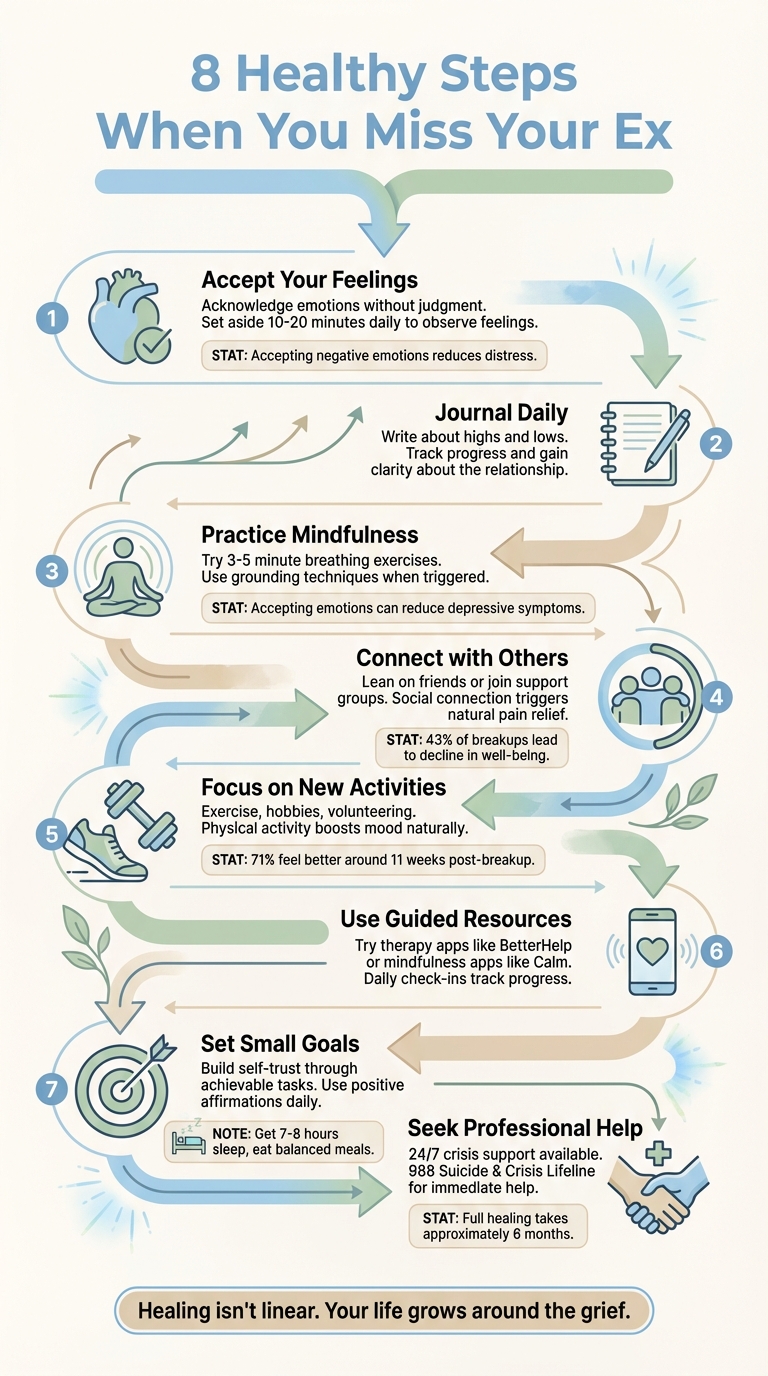
8 Healthy Steps to Take When You Miss Your Ex
“If You Can’t Move On After a Breakup THIS Is Exactly What I’d Tell You to Do” with Jay Shetty
sbb-itb-ee19e1f
1. Accept Your Feelings Without Judging Yourself
The first step in healing is to let yourself experience emotions like sadness, anger, longing, or even relief. Trying to suppress these feelings often makes the grieving process last longer. A 2010 study found that accepting negative emotions can actually reduce distress, while avoiding them may worsen mental health symptoms.
"You actually have to feel your feelings in order to understand and accept what happened." – Sarah Gundle, PsyD, Clinical Psychologist
When you resist your emotions, you risk staying stuck. Ronald Hoang, a Registered Clinical Counselor, puts it this way: "The inability to acknowledge the grief process will lead to stuckness and can lead that person back to their ex".
One helpful practice is setting aside 10–20 minutes each day to observe and name your emotions as they surface. For instance, you might think, "I’m feeling disappointed right now." This technique, sometimes referred to as "wallowing time", allows your emotions to exist without overwhelming your entire day. Recognizing your feelings in this way creates a foundation for taking more proactive steps in managing your post-breakup journey.
When negative thoughts creep in, take a moment to question them. Ask yourself: Is this thought based on fact, or am I catastrophizing? Treat yourself with the same compassion you’d show a close friend going through heartbreak – it can make a meaningful difference in how you navigate this challenging time.
2. Write in a Journal Daily to Process Emotions
Once you’ve acknowledged your feelings, putting them into words can take your healing to the next level. Journaling gives you a private space to sort through emotions like anger, sadness, confusion, and loneliness. Experts often highlight journaling as a powerful tool for gaining clarity.
"Journaling is a great outlet for expressing all your emotions without judgment." – Dr. Daniel Glazer, Clinical Psychologist
Write about both the highs and the lows. This balanced approach keeps you grounded. Focusing only on happy memories might feel comforting, but it can prevent you from seeing the full picture. Matchmaker and Dating Coach Michelle Jacoby explains:
"Focusing solely on happy memories skews reality, and that can hold you back. Although it stings a bit, it’s ultimately helpful to recall and journal about the ways your ex let you down."
By documenting specific moments of disappointment or qualities that frustrated you, you can avoid idealizing the past. This practice helps you stay connected to reality and supports your emotional recovery.
Another helpful tip? Write a short summary of why the relationship ended – something like, "I need space to reconnect with my own needs." Keep it somewhere visible to remind yourself of your decision. If you’re sticking to a no-contact rule, use your journal to jot down everything you’d like to say but choose not to share. This way, you honor your feelings without breaking boundaries.
Reviewing your old entries can also be incredibly rewarding. Heather Wilson, a Certified Trauma Professional at Epiphany Wellness, notes:
"Journaling helps you process your emotions and monitor personal growth over time."
Looking back on what you’ve written allows you to see how far you’ve come and recognize the subtle ways you’re moving forward, even when it feels slow. It’s a simple yet powerful way to track your emotional progress.
3. Try Mindfulness and Grounding Techniques
When feelings of longing hit, it’s easy for your mind to spiral into "what ifs" or replay old memories. Mindfulness can help you break that cycle by keeping you rooted in the present. Instead of battling your emotions or letting them take over, these techniques allow you to acknowledge your feelings without judgment.
Start with a simple 3–5 minute breathing exercise: sit quietly, breathe deeply through your nose, and focus on the sensation of the air moving in and out. If thoughts of your ex sneak in – and they will – gently redirect your attention back to your breath. This practice not only calms your mind but also sets the stage for more focused grounding techniques.
Grounding can be especially helpful when you’re caught off guard – maybe by a song you both loved, a familiar street, or even a certain scent. Deep breathing can settle your nervous system in those moments, helping you avoid panic or impulsive actions. Another approach is tuning into your body. Notice where you physically feel the emotion – maybe it’s a tightness in your chest or a knot in your stomach. Simply observe these sensations without trying to change them. This connection between your body and emotions strengthens your mindfulness practice.
Dr. Lisa Marie Bobby, a psychologist and clinical director at Growing Self, highlights the value of this kind of awareness:
"When you see the cause-and-effect relationship between your thoughts and your feelings, it helps you gain distance from them."
You might also try the 20-minute "wallow" technique. Set aside 10 to 20 minutes to sit with your emotions intentionally, without judgment. This controlled time allows your brain to process the loss instead of suppressing it. Research shows that accepting negative emotions, rather than avoiding them, can reduce depressive symptoms and overall distress. Letting yourself fully experience these emotions can actually speed up the healing process.
4. Connect with Friends or Join a Support Community
When you’re navigating the emotional aftermath of a breakup, leaning on others can be just as important as your personal coping methods. It’s easy to retreat into isolation, replaying old memories on a loop. But just like mindfulness helps you process emotions, social connections can anchor your recovery. Talking with friends, for instance, can actually trigger the release of natural opioids, which help ease emotional pain.
Friends can also offer a much-needed reality check when you start idealizing the past. Psychologist Adam Borland, PsyD, emphasizes the importance of having a strong support system:
"A strong support system gives you people to confide in and who offer honest feedback".
They can remind you of why things ended, helping you see the situation more clearly and avoid falling into the trap of nostalgia.
Consider asking a trusted friend to act as your "sponsor" – someone you can call when you feel tempted to reach out to your ex . Regularly spending time with supportive friends or joining new social groups, like book clubs, sports leagues, or volunteer organizations, can also help combat feelings of loneliness. These interactions not only fill the social void but also reinforce the progress you’re making on your own.
If meeting people face-to-face feels daunting, warmlines offer a great alternative. These phone services connect you with trained peers who provide understanding and support. Given that 43% of breakups lead to a noticeable decline in well-being, building a network of social support is a vital step in your healing process.
5. Focus Your Energy on New Hobbies and Exercise
After establishing a solid support network, the next step is to direct your energy into activities that enhance your overall well-being. Physical exercise plays a key role here – it triggers serotonin and endorphins, which are natural mood boosters. Studies show that engaging in 13–36 sessions of exercise can significantly alleviate symptoms of depression.
Start small and keep it manageable. Dr. Craig Miller from Harvard Health Publishing suggests:
"Start with five minutes a day of walking or any activity you enjoy. Pick something you can sustain over time".
Even something as simple as a daily walk or joining a fitness class can do wonders for your mood. Plus, these activities can help you connect with others. Adding structure to your day, no matter how small, can also create a sense of purpose. Psychologist Dr. Adam Borland explains:
"That structure gives you a sense of accomplishment and purpose, and it allows you to build off of small wins".
Beyond physical activity, diving into creative hobbies can help you rediscover parts of yourself and channel emotions into something productive. Whether it’s drawing, painting, or learning to play a musical instrument, these outlets provide a tangible way to process feelings. You could also explore new skills – take an online course, watch YouTube tutorials, or experiment with cooking recipes you’ve never tried before. Even refreshing your living space – like rearranging furniture or adding a new coat of paint – can symbolize a fresh start and help you feel more in control.
Volunteering is another powerful way to find purpose and connect with others. Whether you spend time at an animal shelter, food pantry, or hospital, giving back can provide a sense of fulfillment. The aim isn’t to ignore your feelings but to process them through meaningful and healthy distractions.
Research suggests that about 71% of people begin to feel noticeably better around 11 weeks after a breakup. Staying active – physically, socially, and creatively – can accelerate this healing process and reduce feelings of depression. By focusing your energy on these enriching activities, you’re taking important steps toward emotional recovery.
6. Follow Guided Healing Resources and Daily Check-Ins
Pair your physical and creative recovery efforts with guided healing tools and regular self-reflection. Once you’ve set up new habits, digital therapy platforms can play a key role in your journey. For instance, BetterHelp connects users with licensed therapists via video, voice, or messaging, while also offering practical tools like worksheets and access to support groups. Many users have shared how these therapists help them "detangle and deconstruct painful pasts" and address toxic relationship patterns.
Mindfulness apps are another great resource for easing emotional strain. Apps like Calm offer curated series such as "Caring For Your Grief", "Radical Self-Care", and "Deep Acceptance", which are specifically designed to help process loss and foster emotional healing.
Incorporating daily check-ins can further structure your recovery. Reflecting on your day helps pinpoint triggers and reduce distress. Psychologist Dr. Adam Borland highlights the importance of this practice:
"That structure gives you a sense of accomplishment and purpose, and it allows you to build off of small wins".
Even dedicating just 3–5 minutes a day to mindfulness or journaling can make a difference. It provides a way to track emotional triggers and monitor your progress over time. The aim is to create a routine that not only supports your emotional recovery but also helps you measure your growth along the way.
7. Build Self-Trust with Small Goals and Positive Affirmations
Rebuilding trust in yourself is an essential part of healing after a breakup. It’s natural to feel shaken and question your self-worth when a relationship ends. Setting small, manageable goals can help you regain confidence and a sense of control over your life. These goals act as stepping stones, reminding you that you can follow through on commitments and create stability in your daily routine. Start by focusing on self-care and turning it into actionable steps.
Make it a priority to get 7–8 hours of sleep, eat balanced meals, and maintain consistent grooming habits. Dr. Adam Borland highlights the importance of this structure:
"That structure gives you a sense of accomplishment and purpose, and it allows you to build off of small wins."
As you achieve these small wins, use positive affirmations to counter negative self-talk. Phrases like "I am learning and growing" or "I trust myself" can be powerful tools. Repeating them regularly helps train your mind to adopt a more encouraging and supportive inner dialogue. These affirmations, when paired with goal-setting, help rebuild trust in yourself, making this step distinct from earlier emotional recovery efforts.
To stay focused, try creating a daily to-do list. Checking off tasks provides a tangible sense of progress and can help reduce overthinking. For a longer-term boost, choose one meaningful milestone to work toward – whether it’s enrolling in a course, planning a trip, or pursuing a personal passion. Having a larger goal in sight gives you a sense of purpose and something exciting to strive for.
8. Get Help from 24/7 Support Resources When You Need It
Sometimes, no matter how much we lean on self-help strategies, we need professional support to navigate tough moments. If missing your ex becomes unbearable, or if you’re dealing with thoughts of self-harm, struggling to get out of bed, or finding it hard to function at work or home, it’s time to seek help.
"Be mindful that mental health treatment is available to help you navigate the emotional challenges you may be experiencing following a breakup." – Dr. Adam Borland, Psychologist at Cleveland Clinic.
Thanks to online therapy platforms, you can connect with licensed therapists 24/7 via video, voice, or live messaging. This makes it easier to access support, even if leaving the house feels impossible.
For immediate crisis support, the 988 Suicide and Crisis Lifeline provides confidential, round-the-clock help when life feels overwhelming. If you’re turning to alcohol or drugs to cope, the SAMHSA helpline at 1-800-622-4357 can connect you with treatment options and support groups. Studies show that if emotional distress disrupts your daily life for more than two weeks, it could be a sign of clinical depression rather than ordinary grief.
Don’t wait until things spiral further. Research reveals that over 43% of people experience a decline in well-being after a breakup. Professional support can help you recover faster. On average, it takes about six months to process the loss of a relationship. Seeking help ensures you have the tools and care needed to regain control when emotions feel too overwhelming.
Conclusion
Missing your ex isn’t something that disappears overnight. The eight steps outlined here work together to help you heal – starting with internal reflection through acceptance, journaling, and mindfulness, and extending to rebuilding your life with social connections, hobbies, exercise, and setting new goals. Ignoring the loss can leave you stuck in a cycle of longing, but these steps offer a gradual way forward.
It’s important to remember that these strategies aren’t quick fixes. As Ronald Hoang, a Registered Clinical Counselor and Psychotherapist, puts it:
"People expect grief to get smaller with time, but actually, your life grows around it. You don’t just ‘get over it.’ It transforms."
Research suggests that some people start feeling better as early as 11 weeks, though fully processing the emotions can take closer to six months.
Healing is rarely a straight path. You’ll likely face good days and bad ones. Studies show that over 43% of breakups lead to a noticeable drop in well-being, so it’s completely normal to struggle. The goal isn’t to erase the pain but to create a life that expands and thrives alongside it.
Keep leaning on tools like journaling, mindfulness, and self-care to build resilience for the road ahead. As Dr. Adam Borland wisely notes:
"The end of a relationship is a time to reflect, clarify your values and decide what kind of life you want moving forward."
Every small step you take today shapes the stronger, more grounded person you’ll become tomorrow.
FAQs
How can I cope with missing my ex in a healthy way?
Coping with missing your ex begins with letting yourself feel your emotions – whether it’s sadness, anger, or even confusion. Ignoring these feelings can make them harder to deal with later on. Allow yourself the time and space to grieve the loss, as it’s a natural and important step in the healing process.
Prioritize taking care of yourself to support your emotional health. Make sure you’re getting enough sleep, eating well-balanced meals, and staying active. Activities like walking, yoga, or strength training can help lift your mood. Mindfulness practices, such as deep breathing or meditation, can bring a sense of calm, while journaling can be a great outlet for sorting out your thoughts and identifying what triggers certain emotions.
Turn to friends or family you trust for comfort and connection – they can remind you that you’re not alone. At the same time, consider diving into new hobbies or rekindling old ones, whether that’s painting, cooking, or volunteering. These activities can bring new joy into your life and help you reconnect with yourself. And if the emotions feel too heavy to handle on your own, reaching out to a therapist can provide you with valuable guidance. Taking these steps can help you navigate the pain and move forward in a healthier, more balanced way.
What are some mindfulness techniques to help me stop thinking about my ex?
Mindfulness techniques are a powerful way to manage lingering thoughts about your ex while working toward emotional stability. These practices are designed to bring you back to the present moment and help ease mental tension. Here are a few methods to try:
- Deep breathing: Slow, intentional breathing can work wonders to calm your mind. A simple technique is to inhale deeply for a count of four, hold the breath for another four counts, and exhale slowly for four counts. Repeat this cycle until you feel more centered.
- Body-scan meditation: This involves focusing your attention on different parts of your body, starting at your toes and gradually moving upward. It’s a gentle way to connect with your body and ground yourself in the here and now.
- Grounding exercises: The 5-4-3-2-1 method is a favorite for redirecting attention. Identify five things you can see, four you can touch, three you can hear, two you can smell, and one you can taste. This simple exercise can anchor your thoughts and bring clarity.
Consistency is key with these practices. Over time, they can help you take charge of your thoughts and support your emotional recovery. Remember to be kind to yourself as you navigate this process. Every step forward counts.
When should I seek professional help after a breakup?
If the pain from your breakup feels like too much to handle or starts disrupting your everyday life, it might be time to connect with a mental health professional. Keep an eye out for signs like constant sadness, trouble sleeping, changes in appetite, difficulty concentrating at work or school, or losing interest in activities that used to bring you joy.
You should also seek help if you’re dealing with increased anxiety, depressive thoughts, urges to turn to substances, or any thoughts of self-harm. Even if your emotions seem like a normal part of a breakup, a therapist can guide you through them in a healthier way and help you avoid lasting emotional struggles. Reaching out for support shows strength, not weakness.
Related Blog Posts
- How to Journal Your Feelings After a Breakup
- How to Stop Overthinking After a Breakup
- The Complete Guide to Healing After a Breakup
- 10 Self-Care Activities for Breakup Recovery
STUMBLE APP
Ready to start healing?
Stumble gives you the community, tools, and support to move forward — free on iOS.
Download the app free →
Tagged with :