Between Therapy and Dating Apps: The Emotional Gap Nobody Talks About (And How to Navigate It)
You know the moment. The breakup is no longer fresh, but it still lives in your chest. Your friends have stopped asking how you’re doing—they assume you’ve moved on. Your therapist, if you have one, has given you tools. And someone, inevitably, has said the thing: “Have you tried getting back out there?”
So you download a dating app. You swipe for eleven minutes. And then you put your phone down because the thought of making small talk with a stranger makes you want to crawl back under your weighted blanket.
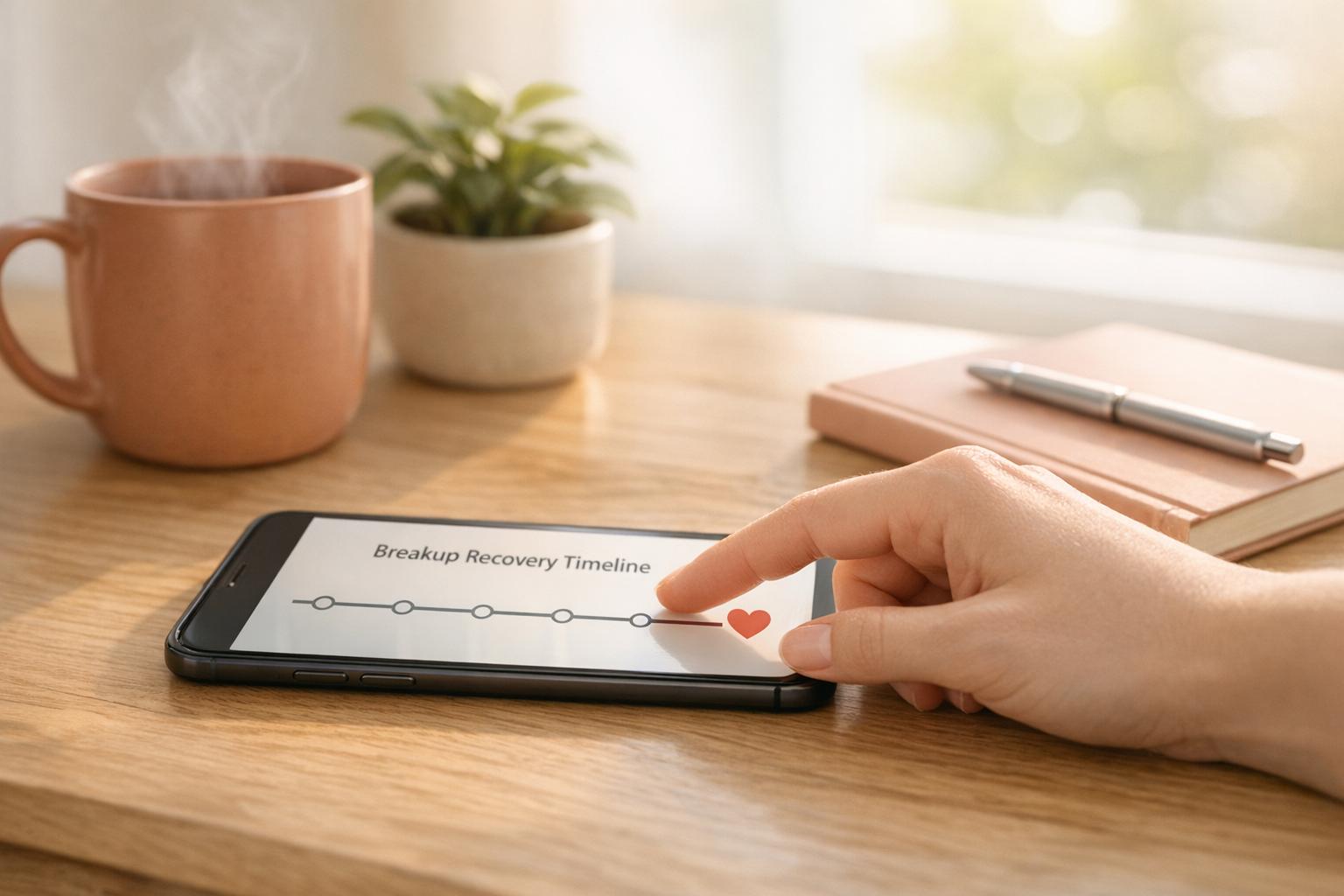
You’re not broken. You’re not “not trying.” You’re in the gap—the strange, unnamed stretch of weeks or months that sits between therapy and dating apps, between acute crisis and being “ready.” It’s a real emotional phase, and it’s one that almost nothing in our culture is designed to support.
This guide is about that gap: what it is, why it matters, what the research says about navigating it well, and what tools actually help when therapy feels like too much and dating apps feel like too soon.
Key Takeaway: There is a distinct emotional phase between needing clinical support and being ready for new romantic connection. Research shows this gap—often lasting 3 to 11 months—is where the most important identity work happens. Filling it with structured reflection, peer support, and daily emotional tools leads to faster recovery and healthier future relationships.
What Is the Gap Between Therapy and Dating Apps?
Let’s name it clearly, because naming things is the first step toward navigating them.
The gap between therapy and dating apps is the emotional middle ground where you are no longer in crisis—you can get through your day, you’re eating, you’re sleeping (mostly)—but you are not yet the version of yourself who’s ready to sit across from someone new and be open, curious, and emotionally available.
It’s the 2 a.m. scroll through their Instagram story you wish you hadn’t watched. It’s the Sunday afternoons that stretch too long. It’s the weird, hollow feeling of being technically fine but emotionally adrift.
In attachment theory terms, this is the period where your attachment system is still activated—still scanning for the person who used to be your safe base—but the rational part of your brain knows that connection is over. Psychologist Dr. Lisa Marie Bobby describes this as “emotional limbo,” where the prefrontal cortex and the limbic system are essentially in disagreement about what’s true.
The Emotional Support Spectrum
Most people need support that lives between these two extremes.
🧠 Therapy & Crisis Support
→
💛 The Gap — Reflection, Community & Daily Tools
→
💬 Dating Apps & New Connection
This middle phase is where most of your real emotional growth happens—and where most people have the least support.
Why This Phase Is Invisible
Our culture has built an enormous infrastructure for the two endpoints. For crisis, there’s therapy, medication, crisis hotlines, and hospital care. For “moving on,” there’s Hinge, Bumble, Tinder, speed dating, and your aunt’s friend who “knows someone perfect for you.”
But for the middle? The messy, nonlinear, deeply personal work of re-discovering who you are outside of a relationship? There’s almost nothing. A few self-help books. Some generic meditation apps. Maybe a group text with friends who care but don’t fully understand.
A 2023 study published in the Journal of Social and Personal Relationships found that perceived social support was the single strongest predictor of post-breakup recovery speed—more than time elapsed, more than who initiated the breakup, more than relationship length. But the same study noted that social support tends to drop off sharply after the first 2 to 4 weeks, precisely when the deeper processing begins.
This is why the gap feels so isolating. The support falls away before the real work starts.
The Science of What Happens in Your Brain (And Body) After a Breakup
Understanding the neuroscience doesn’t make heartbreak hurt less, but it does make it feel less crazy. If you’ve been wondering why you can’t just “get over it,” here’s the short answer: your brain chemistry won’t let you. At least not yet.
| What’s Happening | The Science | What It Feels Like |
|---|---|---|
| Dopamine withdrawal | Your partner was a reliable source of dopamine. Removal triggers the same neural pathways as substance withdrawal (Fisher et al., 2010, Journal of Neurophysiology). | Obsessive thoughts, craving contact, checking their social media compulsively |
| Cortisol surge | Breakups elevate cortisol levels by up to 40%, comparable to a physical injury (Slavich et al., 2010, Clinical Psychological Science). | Physical aches, disrupted sleep, chest tightness, exhaustion |
| Identity disruption | Self-concept clarity drops significantly post-breakup. The brain must rewire neural pathways that encoded “we” back into “I” (Slotter et al., 2010, Personality and Social Psychology Bulletin). | Not knowing what you like anymore, feeling like a stranger in your own life |
| Protest behavior | Attachment system activates “protest behaviors” — attempts to re-establish contact with the attachment figure (Bowlby, 1969). | Sending the text you said you wouldn’t send, driving past their apartment, “accidentally” liking their photo |
| Rumination loops | Default mode network becomes hyperactive, replaying memories and imagined scenarios (Kross et al., 2011, PNAS). | The 3 a.m. spiral where you re-read every old text looking for the moment it went wrong |
Here’s the important part: every one of these responses is normal. They don’t mean you loved too much, were too dependent, or are falling apart. They mean your brain formed a deep attachment, and now it’s recalibrating. The question isn’t whether this happens—it’s what you do while it’s happening.
Why Therapy Alone Doesn’t Fill This Gap (And That’s OK)
Let’s be unequivocal: therapy is powerful. If you’re experiencing severe depression, suicidal ideation, or symptoms of PTSD from your relationship, a licensed therapist is the right first call, not an app. (See the crisis resources at the bottom of this post.)
But for many people navigating heartbreak, the gap isn’t a clinical problem—it’s a human one. And therapy, as brilliant as it is, has structural limitations for this specific phase:
The Structural Limits of Therapy for Heartbreak Recovery
- Access and frequency. The average therapy session is 50 minutes, once a week. Heartbreak happens at 11 p.m. on a Tuesday. It happens when a song plays in the grocery store. The support doesn’t match the rhythm of the pain.
- Cost. In the U.S., the average out-of-pocket cost of therapy is $100 to $200 per session (APA, 2024). The average waitlist for a new patient is 25 days. For a breakup that isn’t causing clinical-level impairment, many people can’t justify the cost—or can’t access it at all.
- The loneliness dimension. Therapy helps you understand your patterns, but it can’t replace the experience of being seen by peers who are in the same trench. A therapist can validate you; someone who cried in their car this morning too can make you feel less alone in a way that’s qualitatively different.
- Not everyone needs it. For many people, heartbreak is painful but not pathological. They don’t need a diagnosis or a treatment plan. They need a container—a structured place to feel, reflect, and gradually rebuild.
None of this is a criticism of therapy. It’s a recognition that the emotional infrastructure most people need after a breakup is daily, accessible, peer-supported, and structured—and that’s a different category of support than what clinical care provides.
Why Dating Apps Make Everything Worse (If You’re Still in the Gap)
On the other end of the spectrum, dating apps are designed for connection—but they assume a baseline of emotional readiness that people in the gap don’t have yet.
Research from the Cyberpsychology, Behavior, and Social Networking journal (Timmermans & Hermans, 2024) found that people who used dating apps within the first three months of a breakup reported higher levels of loneliness and lower self-esteem than those who waited. The paradox: the tool designed to make you feel less alone can make you feel more alone if you’re not ready.
Here’s what typically happens when someone enters the dating pool too early:
Week 1: The Motivation Hit
You download the app. You get matches. It feels like progress. The dopamine reward temporarily masks the heartbreak dopamine withdrawal.
Week 2–3: The Comparison Trap
Every conversation gets silently measured against what you had. Nobody laughs at the right moments. Nobody gets your humor. You start thinking your ex was “the one.”
Week 4–6: Emotional Exhaustion
The performative nature of dating—being charming, being interesting, presenting your best self—becomes unbearable when you’re still figuring out who your self even is right now.
Week 6+: The Rebound or the Retreat
You either attach too quickly to someone who fills the void (rebound) or delete the apps entirely, feeling worse than before you started (retreat). Neither is healing.
The issue isn’t dating apps themselves—they’re fine tools for people who are genuinely ready. The issue is using a connection tool when what you actually need is a reflection tool. It’s like using a hammer when you need a compass.
What Emotional Support Before Dating Again Actually Looks Like
So if therapy is too infrequent (or inaccessible) and dating apps are premature—what actually helps during this phase? The research points to five core ingredients:
1
Structured Emotional Processing (Not Just Venting)
A 2024 study in Emotion (American Psychological Association) found that structured journaling—writing with specific prompts about meaning, identity, and future self—was significantly more effective at reducing emotional distress than free-form venting. The difference: venting can deepen rumination loops, while structured reflection interrupts them.
What this looks like in practice: daily prompts like “What did I learn about myself from this relationship?” or “What’s one thing I want to be true about my next chapter?” These aren’t generic gratitude exercises. They’re targeted emotional processing tools designed around heartbreak-specific themes.
2
Peer Support From People in the Same Phase
There is a specific kind of relief that comes from hearing someone else describe your exact experience. Not a therapist interpreting it. Not a friend who’s happily married trying to empathize. Someone who also woke up at 4 a.m. with their heart racing, wondering if they’ll ever feel normal again.
Social psychologist Dr. James Pennebaker’s decades of research on expressive writing and disclosure shows that sharing emotional experiences with peers who can relate reduces cortisol levels and improves immune function. The mechanism isn’t just emotional—it’s physiological.
Anonymity helps here, too. When you don’t have to manage how your pain lands on someone—when there’s no social cost to being honest—you process more deeply and more quickly.
3
Daily Check-Ins (Not Weekly Appointments)
Heartbreak doesn’t respect schedules. The grief hits when it hits—in the middle of a work meeting, during a commercial for couples’ vacations, the moment you wake up and reach for a body that’s no longer there. Support that only happens once a week, on a schedule, misses most of the real moments.
What helps: a daily practice that takes five to ten minutes and creates a touchpoint with your own emotional state. Research on micro-interventions (Brog et al., 2021, Clinical Psychology Review) shows that brief, daily emotional exercises are more effective at improving well-being than longer, less frequent interventions.
4
Identity Reconstruction (Not Distraction)
One of the most under-discussed aspects of breakups is the identity vacuum they create. Psychologists call it “self-concept disruption”—the sudden loss of the roles, routines, and future narratives that were tied to your relationship. You weren’t just losing a partner; you were losing the version of yourself that existed in relation to them.
The work in the gap isn’t to “find yourself” (that phrase is overused to the point of meaninglessness). It’s to actively rebuild your sense of self through values clarification—a technique from Acceptance and Commitment Therapy (ACT) where you identify what matters most to you independent of any relationship, and start making small daily choices that align with those values.
5
Tagged with :

Tagged with :