
When you’re dealing with a breakup, self-care isn’t just helpful – it’s essential for healing. This article outlines 10 practical self-care activities to help you regain balance, process emotions, and rebuild your confidence. From journaling and mindful movement to creating new routines, these steps focus on small, actionable habits that promote emotional recovery and personal growth. Here’s a quick look at the strategies:
- Journaling: Process emotions with guided prompts and reflection.
- Mindful Movement: Simple activities like yoga or walking to ease stress.
- Healthy Eating: Prioritize nutrient-dense meals to stabilize mood.
- Positive Affirmations: Replace self-doubt with compassionate self-talk.
- Personal Growth Quizzes: Rediscover yourself and gain insights.
- New Routines: Build structure to regain stability.
- Dancing: Boost energy and release pent-up emotions.
- Track Wellness: Focus on hydration, sleep, and small daily wins.
- Use Support Tools: Apps like Stumble offer guidance and community.
- Try New Activities: Explore hobbies or interests to reconnect with joy.
These activities won’t erase the pain overnight, but they can help you move forward one step at a time. Healing takes patience, but consistent self-care can transform heartbreak into a period of growth.
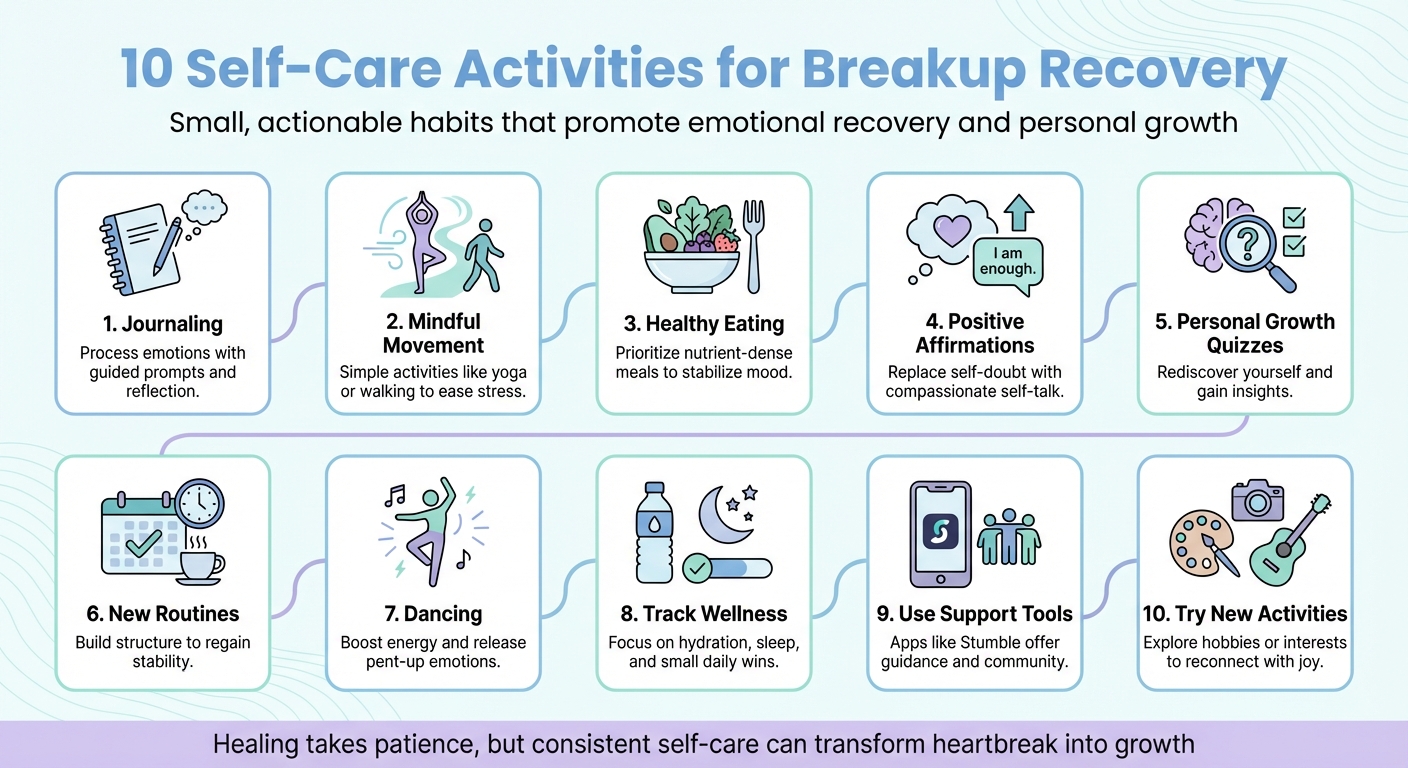
10 Self-Care Activities for Breakup Recovery
Evening Routine to Heal After a Breakup 🌙 Self-Care & Recovery Tips
1. Write in a Private Journal with Guided Prompts
Journaling offers a safe space to process the swirl of emotions after a breakup. In fact, a study published in Psychosomatic Medicine revealed that writing specifically about a breakup can be more helpful for mental health than other types of writing.
Jesse Kahn highlights the power of journaling:
"Writing can be one of the most sacred and healing spaces in one’s life. Having the space to write freely can give you insight into your breakup, your current feelings, and why your breakup is so painful."
Start with prompts that help you release bottled-up emotions. For instance, try writing a closure letter to your ex – but resist the urge to send it. This exercise can help you let go of lingering feelings. You could also jot down the negative aspects of the relationship or list the freedoms you now enjoy as a single person. Logan Ury, Director of Relationship Science at Hinge, advises: "Turn your angst into a manifesto." Write down every reason the relationship didn’t work so you have something to revisit when nostalgia creeps in.
To dig deeper, use reflection prompts that help you uncover patterns. Ask yourself questions like, "What was missing in this relationship?" or explore whether you altered your personality to fit your partner’s expectations. These prompts can clarify your needs and help you understand what to prioritize moving forward. Amelia Kelley, Ph.D., a trauma-informed therapist, emphasizes that journaling "increases self-awareness and the connection with your inner voice that may have been ignored while in the ending phase of the past relationship".
Choose a format that feels natural to you – whether it’s a traditional notebook, a digital tool like Google Docs, or even voice memos. While research suggests that writing by hand may boost creative processing, the key is consistency. Find a routine that works for you, whether it’s during your morning coffee or right before bed. Over time, reread your entries to track your progress. You’ll likely notice a shift from sadness to self-discovery as you reflect on how far you’ve come. This growing clarity can also lay the groundwork for other self-care practices, such as mindful movement, to aid in your recovery.
2. Start Your Day with Mindful Movement
Getting your body moving does more than just burn calories – it helps calm your nervous system, which can be a huge relief when you’re dealing with emotional pain. Physical activity triggers the release of endorphins, those feel-good chemicals in your brain that naturally improve your mood and help counteract the stress of heartbreak.
If you’re struggling to get started, keep it simple. Even five minutes of stretching or a short walk can make a difference. Adam Borland, PsyD, from Cleveland Clinic, emphasizes the importance of small steps:
"That structure gives you a sense of accomplishment and purpose, and it allows you to build off of small wins".
These small wins add up, giving you momentum as you work through your recovery.
Pick movements that feel right for you. Gentle yoga can help calm your mind and body, while a mindful walk in nature can ground you and bring a sense of balance. Feeling angry or frustrated? Channel that energy into something more intense, like boxing or dancing, to physically release pent-up tension. UNH Psychological & Counseling Services suggests incorporating soothing activities into your daily routine:
"Plan to do something calming and soothing EVERY DAY. Some things to try: meditation, yoga, journaling, music, progressive muscle relaxation, take a walk, or anything else that you find soothing."
Before you start moving, try pairing your activity with box breathing – inhale, hold, exhale, and hold for equal counts. This simple breathing technique can help center your mind and prepare you for the day ahead.
The goal here isn’t to push yourself too hard but to stay consistent. Kryss Shane, LMSW, advises:
"Start small… Move your body more".
Whether it’s a morning stretch, a quiet walk to clear your thoughts, or progressive muscle relaxation to ease tension, these small daily practices can help shift heavy emotions and bring you back to the present moment. Over time, this routine becomes a steadying force – a way to reconnect with yourself when everything else feels uncertain. It’s a simple but powerful step toward deeper healing.
3. Prepare Healthy Meals with Intention
Recovering from a breakup often disrupts daily routines, including eating habits. Skipping meals or relying on processed foods may seem convenient but can negatively affect your mood. As Ditch the Label highlights:
"Your emotions are heavily influenced by diet and levels of activity."
This isn’t just a saying – science supports it. About 90% to 95% of your body’s serotonin receptors are located in your gut. That means what you eat has a direct impact on your mood, sleep, and emotional balance. Choosing nutrient-packed foods can help build emotional resilience and stabilize your mental health.
Focus on whole, nourishing foods like fresh fruits, vegetables, nuts, whole grains, lean proteins, and fiber-rich legumes such as lentils. These foods provide the nutrients your body needs to support a steady mood. On the flip side, processed foods and refined sugars can throw your emotions off balance. If you’re looking for a proven approach, the Mediterranean diet – rich in olive oil, vegetables, and omega-3 fatty acids – has been shown to boost mood-regulating hormones.
When energy levels are low, pantry staples can be lifesavers. Quick options like canned tuna, salmon, or beans offer high-protein solutions without much effort. Pair these with frozen brown rice, pre-cut coleslaw mixes, or jarred roasted red peppers for easy, nutritious meals. These shortcuts make it easier to maintain a healthy diet while keeping meal prep stress-free. Nourishing your body in this way not only supports physical health but also strengthens your emotional recovery.
Cooking can be more than just a chore – it’s an act of self-care. As Kryss Shane, LMSW, explains:
"Sometimes, in the thick of emotional challenges, a person can use all of their energy just to get out of bed each day, feed themselves, and get back into bed."
Even preparing one healthy meal a day can provide structure and remind you of your ability to care for yourself. Over time, these small, intentional choices can lay the groundwork for deeper healing and emotional stability.
4. Practice Daily Positive Affirmations
Breakups often stir up feelings of self-doubt and harsh self-criticism. Jesse Kahn, LCSW, CST, Director and Sex Therapist at The Gender & Sexuality Therapy Center, explains it well:
"Often, people use breakups as evidence that they are unloveable."
Positive affirmations can help challenge this unkind narrative by replacing negative self-talk with compassion. When a critical thought creeps in, acknowledge it and consciously swap it out for affirmations like, "I am doing my best" or "My feelings matter."
The key is to make your affirmations personal and authentic so they truly resonate. Oludara Adeeyo, LCSW, Author and Therapist, highlights this:
"The best affirmations acknowledge what is going on in your world, emotionally and physically, while focusing on your future."
If overly optimistic affirmations feel out of reach, start small with neutral statements like, "Surviving the day is more than enough." Another helpful approach is the "friend test." Write down what you’d say to comfort a close friend in the same situation, then use those kind words for yourself.
To make this practice part of your routine, consider simple rituals. Jot down five affirmations each day, stick them on your mirror, or set reminders on your phone. These little moments of self-compassion can quietly rebuild your self-esteem and provide a foundation for emotional healing. Pairing affirmations with other self-care habits can strengthen your emotional resilience over time – without any pressure to rush the process.
5. Take Personal Growth Quizzes
After a breakup, it’s common to feel like you’ve lost a piece of yourself. Personal growth quizzes can be a helpful tool to reconnect with who you are outside of the relationship. These quizzes offer a structured way to explore your individuality and shift your attention away from the emotional weight of heartbreak. Liz Afton, LMSW, a psychotherapist at The Gender & Sexuality Therapy Center, shares:
"If you’re thinking about your ex, shifting your focus can lessen the intensity and emotional pull related to the heartbreak."
Websites like Marriage.com and Psychology Today provide quizzes that assess your grief and suggest recovery strategies. These results can spark deeper self-reflection and help you better understand your emotional state.
You can take it a step further by using your quiz results as journaling prompts. Pair this with logic-based activities like Sudoku or crosswords to keep your mind active and grounded, steering you away from nostalgia. As Coaching Happiness puts it:
"As we look forward, we have a renewed freedom to grow beyond who we were in the relationship to become the person we genuinely hope to be".
These quizzes can also uncover overlooked boundaries or recurring patterns in your past relationships, offering valuable insights to guide your future. By engaging in this focused self-reflection, you strengthen the foundation for healing and growth.
6. Build New Healthy Routines
Breakups can throw your daily life off balance, leaving you feeling unmoored. Creating new routines can help restore a sense of stability and give you something to lean on during this uncertain time.
Routine offers more than just structure – it provides a sense of purpose. Dr. Adam Borland from Cleveland Clinic highlights this point:
"That structure gives you a sense of accomplishment and purpose, and it allows you to build off of small wins."
Start with the basics: get enough sleep, stay hydrated, and take care of yourself. Kryss Shane, LMSW and LGBTQ+ mental health expert, suggests beginning with manageable goals:
"Start small. Commit to flossing four times a week. Decide to eat one healthy meal a day. Move your body more."
These small steps build momentum and remind you of your ability to follow through. Using tools like a chore chart or a sticker tracker can make progress feel tangible. As Shane explains:
"It’s a great physical representation that you are totally capable of meeting whatever goal you set your mind to!"
Once you establish a foundation, incorporate activities that help refocus your mind. Logic puzzles, like counting backward from 300 by 7s or playing Sudoku, can shift your attention from emotional overthinking to rational problem-solving.
This is also a great time to revisit hobbies or interests you may have set aside. Rediscovering these activities can help you reconnect with your individuality.
Protecting your new routines is just as important as building them. Setting digital boundaries, such as muting or blocking your ex on social media, can shield you from unnecessary emotional setbacks. Studies show that maintaining online connections with an ex can slow down emotional recovery. Additionally, decluttering your space by removing reminders of your ex can be a surprisingly therapeutic process.
The goal isn’t perfection – it’s about creating a framework that supports your healing. Each small goal you achieve reinforces your confidence and reminds you that you’re capable of shaping your own future. Over time, these small wins not only restore balance to your daily life but also help rebuild your emotional strength.
sbb-itb-ee19e1f
7. Dance to Boost Your Energy
Breakups can leave you stuck in a loop of negative thoughts, but dancing offers a simple way to shift your mood and energy. You don’t need any training – just move your body and let go of those heavy emotions.
Movement has a way of releasing feelings that might feel stuck inside. Studies show that dancing helps you stay present, which can be especially helpful when you’re overwhelmed by breakup pain. Plus, it naturally boosts your mood, easing feelings of sadness and anxiety. Like other forms of self-care, dancing helps you regain a sense of control and build emotional strength.
If even the idea of dancing feels like too much, start small. Aimee, a blogger for YoungMinds, puts it perfectly:
"Anything to just get yourself moving is so powerful, especially when getting out of bed can feel like a lot of effort".
Put on an upbeat song, sing along, and let your body move however it feels right. Don’t worry about technique – focus on expressing yourself.
If you’re ready to mix things up, think about trying a dance class that pushes you out of your comfort zone. Some people find that exploring styles like pole dancing or something entirely new helps them reconnect with their confidence and embrace their body in a fresh way. The key is to choose something that genuinely makes you happy. Dancing can also be a great way to connect with others, helping to ease the loneliness that often comes with a breakup.
This practice goes hand-in-hand with mindful movement and journaling, turning emotions like anger or sadness into physical energy. Dancing becomes a way to release those feelings and remind yourself of your resilience. It’s not about perfect moves – it’s about letting go and finding your strength.
8. Track Your Hydration and Basic Wellness
Breakups can throw your daily routines out of balance, often making it harder to prioritize self-care. But taking care of your physical health is a crucial part of emotional healing. Studies suggest breakups can increase cortisol levels and may even lead to "broken heart syndrome", with rates jumping to 7.8% compared to a baseline of 1.8%.
One simple way to regain a sense of control is by tracking your hydration. Abdul Jamil Nasir emphasizes the importance of staying hydrated:
"Drink plenty of water throughout the day to keep your body and mind functioning optimally."
Using a visual tracker can help you stay consistent. Think of something simple, like a chart where you add stickers for every glass of water you drink or every healthy meal you eat. Seeing your progress in a tangible way can reinforce your commitment to self-care.
Beyond hydration, small wellness habits can make a big difference. In the early days after a breakup, even basic actions – getting out of bed, taking a shower, or eating a wholesome meal – are victories worth celebrating. Aim for 7–8 hours of sleep each night, drink enough water, nourish your body with balanced meals, and try walking for 30 minutes a day. These simple steps not only improve your mood but also work alongside other recovery practices to help rebuild your emotional strength.
9. Use Stumble for Guided Healing and Community Support

Going through a breakup can feel incredibly isolating, but it doesn’t have to be. Stumble is a digital platform designed specifically to support breakup recovery, offering a mix of guided resources and community support to help you navigate your emotions and rebuild your sense of self. It’s a perfect complement to the self-care practices we’ve already discussed.
The app provides a range of tools to keep your recovery on track, including private journaling features, guided content, and daily check-ins. What sets Stumble apart is its focus on the unique challenges of heartbreak, offering personalized healing paths based on where you are in your journey. Its moderated community spaces allow users to share their experiences, offer support to others, and feel understood in a way that’s hard to replicate offline. Research highlights the importance of social connection in recovery, showing that isolation can actually slow down the healing process.
One standout feature of Stumble is its anonymous community connection, which links you with others who truly understand what you’re going through. Studies suggest that support groups can help fill the social void often left after a breakup, and the empathy shared in these spaces can be incredibly soothing for emotional wounds.
For those overwhelming moments when emotions run high, Stumble also provides 24/7 grounding support. Features like mindfulness-based meditations are tailored to help you build resilience and sit with intense feelings, offering professional-grade tools you can access anytime.
With its safe and supportive environment, structured resources, and empathetic community, Stumble is there to help you heal at your own pace – no pressure to jump back into dating or commit to formal therapy. It’s your space to process, connect, and move forward when you’re ready.
10. Try New Activities That Bring You Joy
Reconnecting with what makes you happy is a powerful way to rebuild your sense of self. Trying out new activities helps you create fresh, meaningful memories that are free from the weight of your past relationship. Plus, diving into new experiences triggers the release of feel-good hormones, lifting your mood and opening the door to positive connections with others. This kind of exploration works hand-in-hand with other self-care practices, encouraging personal growth and a renewed sense of joy.
Look for activities that spark a flow state – that magical feeling where you’re so absorbed in what you’re doing that time seems to fly. This could mean picking up a creative hobby, taking a class to learn a new skill, or even enjoying something as simple as a walk in nature. Trauma-informed therapist Amelia Kelley, Ph.D., emphasizes the importance of these moments:
"Spending time in flow through play can increase confidence, self-esteem, and your connection with yourself".
These experiences remind you of who you are outside of the context of your previous relationship.
You don’t need to spend a fortune to explore new activities. Your local library is a treasure trove of free resources, from books and audiobooks to workshops and community clubs. You could also try geocaching (a real-world treasure hunt you can do with your smartphone), start a small container garden, or experiment with a basic watercolor kit. Even simple pursuits like stargazing, nature walks, or tackling a Sudoku puzzle can help shift your focus from emotional overwhelm to logical problem-solving, giving your heart a chance to rest while keeping your mind engaged. These budget-friendly options are a great way to keep both your mind and body active.
Just like mindful movement or journaling, exploring new activities helps you build resilience and redefine who you are. Step out of your comfort zone – go on a solo date to a museum, a concert, or a restaurant. Try something physical, like hiking or boxing, to release pent-up tension and reconnect with your body. The goal isn’t to be perfect at any of these things – it’s about discovering what brings you joy and taking small steps toward rebuilding your identity, one new experience at a time.
Comparison Table
Stumble offers clear, tiered pricing plans tailored to support your breakup recovery journey, whether you’re just starting to heal or looking for more advanced tools.
The Free plan is a solid starting point, providing unlimited cards, automated management, and SOX compliance. While it’s great for initial recovery steps, advanced tools are limited.
The Pro plan, priced at $48/month, includes 10 TB of private journaling storage and responsive support. This plan is perfect for those actively working through their breakup, offering a full library of guided healing content and access to community features.
For those who need the most extensive support, the Business plan at $140/month delivers premium tools and unlimited storage. While designed for intensive use, most individuals will find the Pro plan sufficient for their recovery needs.
| Plan | Monthly Price | Storage | Tools Access | Support |
|---|---|---|---|---|
| Free | $0 | Basic | Limited | Standard |
| Pro | $48 | 10 TB | Full Access | Responsive |
| Business | $140 | Unlimited | Premium | – |
Start with the Free plan and upgrade as your needs evolve.
Conclusion
Healing from a breakup is rarely a straight path. But by focusing on consistent self-care – like journaling, staying active, and creating new routines – you can gradually turn heartache into recovery.
In fact, studies show that practicing self-compassion can significantly reduce intrusive thoughts for up to nine months. This highlights how small, intentional actions can lead to lasting improvements in mental well-being.
"Mental health care isn’t just for getting you out of the pits of problematic situations. It’s also for harnessing your power and channeling it into the direction best for you moving forward." – Kryss Shane, LMSW, LGBTQ+ mental health expert
A breakup can be a chance to regain control and build resilience. By putting your well-being first, you can shift from merely surviving to thriving.
Healing takes patience. Respect your own timeline, celebrate even the smallest victories, and trust that with steady self-care, the pain will eventually fade.
FAQs
How does journaling support emotional healing after a breakup?
Journaling offers a private and judgment-free way to navigate the complex emotions that often come with a breakup. Putting your feelings into words – whether it’s sadness, frustration, or even moments of gratitude – can help you recognize and process what you’re experiencing, rather than letting those emotions fester. This act of acknowledgment can ease the grieving process and prevent you from falling into cycles of negative thinking.
Beyond emotional release, journaling helps you track your progress over time. By revisiting your entries, you may notice recurring patterns, identify emotional triggers, or uncover areas where growth is possible. These insights can sharpen your self-awareness, strengthen your confidence, and even guide you in establishing healthier boundaries in future relationships. Plus, the act of writing can provide a soothing daily ritual that grounds your thoughts and helps curb overthinking.
In short, journaling is an accessible and effective self-care tool that supports emotional clarity, inner strength, and the healing process – essential elements for moving forward after a breakup.
What are some easy mindful movements to help with breakup recovery?
Mindful movements can be a simple yet powerful way to ease tension and encourage emotional well-being. Here are a few easy exercises you can try in the comfort of your home:
- Neck and Shoulder Rolls: Whether sitting or standing, keep your posture tall. Slowly roll your head in a full circle – start clockwise, then switch to counterclockwise. Follow this by gently circling your shoulders, lifting them toward your ears and rolling them back down. Take deep breaths as you move to enhance relaxation.
- Cat-Cow Stretch: Start on all fours with your hands under your shoulders and knees under your hips. As you inhale, arch your back and lift your head toward the ceiling (Cow pose). On the exhale, round your spine and tuck your chin toward your chest (Cat pose). Repeat this flow for 5–6 breaths, moving with intention.
- Seated Forward Fold: Sit on the floor with your legs stretched out in front of you. Inhale to lengthen your spine, then exhale as you gently reach for your toes or shins – whatever feels comfortable. Hold the stretch for 15–30 seconds, focusing on deep, steady breaths.
These exercises take just a few minutes and can help you unwind, increase flexibility, and create a stronger connection with your body. Aim to practice them 3–5 times a week to see the most benefit.
Why is it important to eat healthy after a breakup?
Eating well after a breakup isn’t just about nourishing your body – it’s a way to care for your emotional health too. Choosing the right foods can help stabilize your mood, keep your energy steady, and give your body the support it needs during a tough time.
While it might be tempting to dive into comfort foods like sweets or chips, those quick fixes can lead to energy crashes and might even heighten feelings of sadness or anxiety. Instead, aim for meals packed with fruits, vegetables, lean proteins, and whole grains. These nutrient-rich options can help you feel more balanced and steady as you navigate the healing process. Taking care of yourself through mindful eating is a powerful act of self-care that can make a real difference.
Related Blog Posts
- Breakup Recovery Checklist: 15 Steps to Heal
- How to Stop Overthinking After a Breakup
- The Complete Guide to Healing After a Breakup
- Therapy vs Support Groups: Finding the Right Help
STUMBLE APP
Ready to start healing?
Stumble gives you the community, tools, and support to move forward — free on iOS.
Download the app free →
Tagged with :