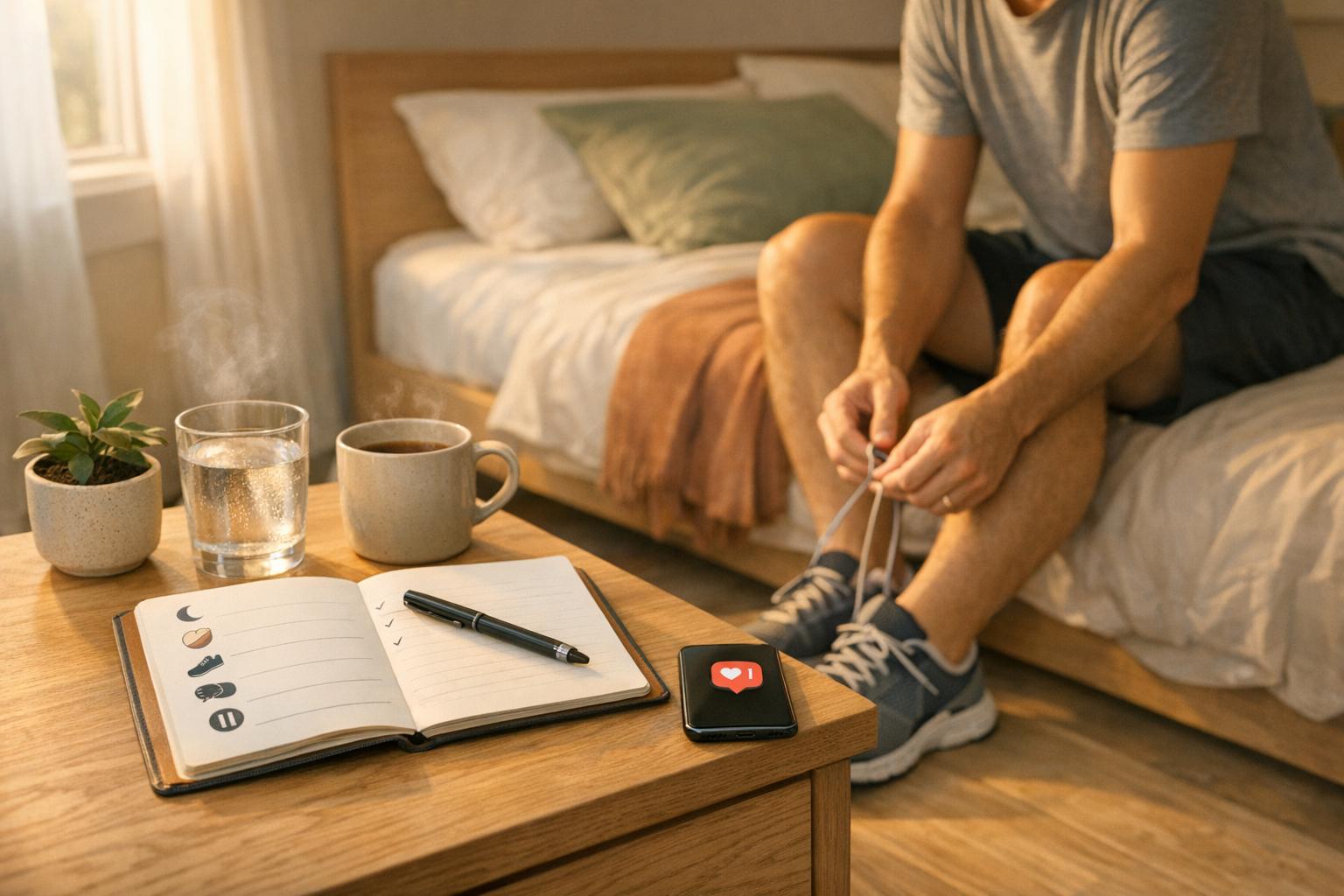
When a relationship ends, it can throw your daily life into chaos. Sleep becomes erratic, meals are skipped, and routines vanish, leaving you emotionally drained. This article tackles five common challenges people face when trying to regain stability after a breakup and offers practical solutions to overcome them:
- Sleep Disruption: Breakups often lead to irregular sleep patterns, keeping your brain stuck in overdrive. A consistent sleep schedule, exposure to natural light, and a calming bedtime routine can help reset your internal clock.
- Poor Nutrition: Skipping meals or eating at odd hours can worsen your mood and energy levels. Eating every 3–4 hours, starting with a small meal in the morning, and focusing on nutrient-rich foods can stabilize your emotions.
- Avoiding Physical Activity: Staying inactive prolongs emotional stress. Start with just 10 minutes of movement daily – whether it’s walking, stretching, or dancing – to lower cortisol and improve your mood.
- Social Withdrawal: Isolation can slow emotional recovery. Reconnect gradually by spending time with trusted friends or joining a support group.
- Overthinking: Rumination drains energy and keeps you stuck. Use tools like "worry windows", quick journaling, and grounding techniques to break the cycle.
Small, consistent actions are key to rebuilding routines and emotional resilience. Tools like Stumble can support you with tracking, journaling, and guided recovery paths. Showing up for yourself, even in small ways, helps you move forward.
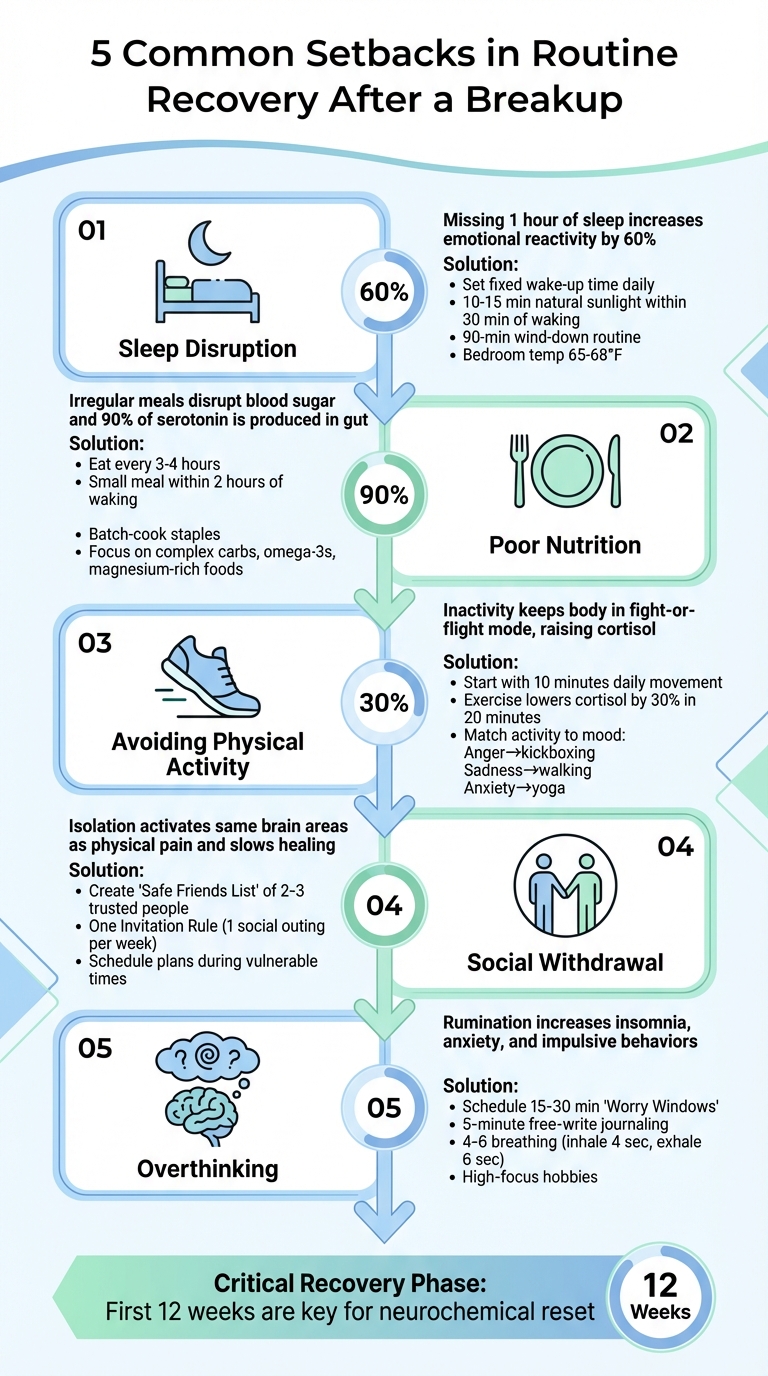
5 Common Setbacks in Post-Breakup Recovery and Solutions
Evening Routine to Heal After a Breakup 🌙 Self-Care & Recovery Tips
sbb-itb-ee19e1f
Setback 1: Irregular Sleep Patterns
When a breakup disrupts your sleep schedule, the effects go far beyond just feeling groggy. Missing even one hour of sleep can increase emotional reactivity by 60%. This happens because the amygdala, the brain’s emotional center, becomes overactive, while the prefrontal cortex – the part responsible for rational thinking – essentially powers down.
How Poor Sleep Impacts Emotional Recovery
Lack of sleep keeps breakup memories fresh and unprocessed. Normally, during REM sleep, your brain works to organize emotional experiences, making them feel less intense over time. Without sufficient sleep, those painful memories remain vivid, feeding into a cycle of constant overthinking.
Heartbreak also triggers elevated cortisol levels, which interfere with melatonin production. This makes it harder to fall asleep, creating a loop where exhaustion worsens stress and anxiety. Irregular sleep and wake times further disrupt your nervous system, robbing it of the stability it needs to recover from emotional upheaval.
"Your sleep schedule isn’t just about rest; it’s about giving your brain the conditions it needs to heal." – Sarah Thompson, Ahead
Breaking this cycle requires establishing a consistent routine.
Solution: Build a Steady Sleep Schedule
Start by setting a fixed wake-up time every day, even on weekends. This helps stabilize your circadian rhythm, giving your brain a sense of predictability. Within 30 minutes of waking, spend 10–15 minutes in natural sunlight. This suppresses melatonin and helps reset your internal clock.
Develop a 90-minute wind-down routine each night. Lower the lights, step away from screens (blue light can suppress melatonin for up to three hours), and keep your bedroom cool – ideally between 65–68°F. If breakup-related thoughts start creeping in at bedtime, try "parking" them. Visualize setting those thoughts aside until a designated "worry window", ideally earlier in the evening around 7:00 PM.
To make your bedroom a place of recovery, remove emotional triggers like photos, gifts, or anything tied to the breakup. Tools like Stumble (https://joinstumble.com) can also help you monitor your sleep patterns and stay consistent with your new schedule.
Setback 2: Neglecting Nutrition and Meal Routines
After a breakup, eating often gets pushed to the back burner. Breakfast might disappear from your routine entirely, and lunch could turn into a late, hasty grab at 4:30 PM. This lack of structure in your meals can throw off your energy levels and amplify feelings of stress and anxiety. Just as sticking to a sleep schedule helps stabilize emotions, maintaining consistent eating habits can ground both your energy and mood.
The Connection Between Nutrition and Emotional Well-Being
Skipping meals or eating at odd hours can wreak havoc on your blood sugar levels, leading to crashes that leave you feeling drained, irritable, and more anxious. These physical effects can make heartbreak feel even harder to manage. Studies have shown that delaying meals significantly – like eating lunch hours later than usual – can harm your memory and focus. As Rayven Nairn, MS, RDN, LDN from Johns Hopkins University notes:
"Misalignment of your mealtimes with your bodily clock can cancel out all the benefits of your healthy diet".
This phenomenon, sometimes called "eating jetlag", disrupts your internal rhythm – exactly when you need stability the most.
Breakups can further complicate this issue. Stress hormones can throw off the balance between ghrelin (which makes you feel hungry) and leptin (which signals fullness). This imbalance can leave your appetite all over the place – some days you might feel constantly hungry, while on others, you might have no desire to eat at all. Adding to this, nearly 90% of your serotonin – a neurotransmitter that helps regulate mood – is produced in your gut. Skipping proper nutrition means depriving your brain of the resources it needs to help you feel emotionally steady.
Solution: Simple Meal Planning
Getting your nutrition back on track is just as important as re-establishing a sleep routine. The key here isn’t perfection – it’s consistency. Aiming to eat every 3–4 hours helps keep your blood sugar stable and avoids the "hanger" that can worsen your emotional state. One simple rule to start with? Have a small meal within two hours of waking up. This helps break your overnight fast and gives your brain the early fuel it needs.
On days when you feel up to it, try batch-cooking staples like proteins and grains (think quinoa, lentils, or roasted chicken) so you always have something nourishing on hand. Focus on foods that support emotional balance: complex carbs (like oatmeal or sweet potatoes) for steady energy, omega-3-rich options (like salmon or walnuts) to reduce inflammation, and magnesium-rich choices (like leafy greens or dark chocolate) to help manage stress.
Keeping a private food journal can also help you identify patterns in your eating habits. Are you skipping meals because you’re genuinely not hungry, or because sitting down to eat feels overwhelming? Using the 80-20 rule – aiming for consistency 80% of the time while allowing some flexibility the other 20% – can ease the pressure and reduce guilt. Tools like Stumble’s journaling feature (https://joinstumble.com) can make tracking these patterns easier and help you identify when emotional triggers, rather than physical hunger, are influencing your choices.
Setback 3: Avoiding Physical Activity
After a breakup, it’s tempting to retreat to the couch and stay there. While that might feel comforting in the moment, avoiding movement can actually prolong the emotional pain. Here’s how to gradually bring physical activity into your routine and why it’s a game-changer for recovery.
How Movement Helps Reduce Stress
Skipping exercise can keep your body stuck in "fight-or-flight" mode by raising cortisol levels. This stress response often leads to physical symptoms like chest tightness and racing thoughts. On the flip side, physical activity is one of the quickest ways to lower cortisol – sometimes by as much as 30%.
Within just 20 minutes of moderate exercise, your brain releases endorphins, which help ease emotional pain and counteract the drop in dopamine and oxytocin that often follows a breakup. Sarah Thompson from Ahead puts it best:
"Movement is one of the fastest ways to shift your brain out of heartbreak mode and into healing".
Exercise can also act like "meditation in motion". Activities like walking, stretching, or lifting weights pull your focus to things like balance, coordination, and breathing, which helps interrupt obsessive thought patterns. Different forms of exercise offer unique benefits: cardio activities such as running or dancing provide a quick mood boost, strength training builds confidence and reduces anxiety, and yoga or stretching releases tension in areas like the shoulders, chest, and jaw. These physical and mental shifts make it easier to take small steps toward regular movement.
Solution: Start Small with Movement
Just like sleep and nutrition, movement plays a critical role in emotional stability. The goal isn’t to train for a marathon but to help your nervous system reset. Begin with a 10-Minute Start: commit to just 10 minutes of activity each day. This could be as simple as a walk around the block, stretching in your living room, or dancing to a couple of your favorite songs.
Tailor your activity to how you’re feeling. If anger is bubbling up, try kickboxing or sprinting. Feeling sad? A long walk in nature might help. For anxiety or restlessness, yoga or gentle stretching can bring calm. During this time, consistency is more important than intensity. Even a short 10-minute walk can improve your mood and help you sleep better.
On days when energy is low, opt for micro-movements – two minutes of stretching or five minutes of walking in place. To make it easier, set yourself up for success by laying out workout clothes the night before. You can also create "anchor activities" like a recurring Tuesday evening walk or a Saturday morning yoga session to bring structure to your week. Tracking how you feel before and after moving can help you see the connection between activity and emotional relief.
For extra support, tools like Stumble’s daily check-ins (https://joinstumble.com) can help you track how different types of movement impact your mood as you heal.
Setback 4: Social Isolation and Withdrawal
Daily routines, including social interactions, are essential for regaining emotional balance after a breakup.
It’s normal to pull back from loved ones during this time. While some solitude can feel comforting, staying isolated for too long can slow down the healing process and disrupt your sense of stability.
Why Social Connection Matters
Breakups activate the same parts of the brain as physical pain, creating what researchers call "social pain". Even if withdrawing feels like the natural response, studies show that staying connected helps the brain recover more effectively. Sarah Thompson from Ahead explains:
"Your brain actually heals faster when you’re connected to others, not isolated from them. Meaningful relationships aren’t just nice to have during post-breakup recovery; they’re essential neurological medicine".
Spending time with people who make you feel safe can trigger co-regulation, where their calm energy helps stabilize your nervous system. On the other hand, isolation can lead to replaying painful memories, which makes moving on even harder. Research from Stanford University also highlights that strong social connections reduce anxiety, boost self-esteem, and even strengthen the immune system. The first 12 weeks after a breakup are particularly sensitive, making social interaction a key part of the recovery process.
With this in mind, let’s look at some simple ways to reconnect with others.
Solution: Gradual Reintegration
Rebuilding social connections doesn’t have to be overwhelming. Start small and focus on low-pressure steps to ease back into interacting with others.
Instead of diving into large gatherings, begin with one-on-one or small group interactions. Create a "Safe Friends List" – a short list of two or three trusted people who make you feel comfortable and supported. These individuals can act as your emotional anchors during this time.
Try the "One Invitation" Rule, where you commit to one social outing per week. Opt for low-key activities like a walk, coffee, or a casual class. These interactions allow for connection without the pressure of intense conversations. Cody DeBos, RN, BSN from Breakup Buddy, shares:
"Having a social calendar ahead of time keeps you in a good routine and makes it harder to convince yourself you’d rather sit around in pajamas and feel sad".
Pinpoint times when you feel most vulnerable – like Saturday mornings or dinner hours – and schedule simple social plans during those periods. If in-person interaction feels like too much, consider joining an anonymous support group. Platforms like Stumble (https://joinstumble.com) offer a safe, judgment-free space to connect with others who understand your experience, without needing to share your full story.
Finally, protect your emotional boundaries by using phrases like, "I appreciate your concern, but I’d rather not talk about that right now." This allows you to maintain connections without feeling overwhelmed. The goal isn’t to become instantly social but to slowly counter isolation and support your journey toward healing.
Setback 5: Overthinking and Disrupted Focus
Much like poor sleep or withdrawing socially, overthinking can wreak havoc on your daily life and slow the healing process. After a breakup, it’s common to replay events in your mind over and over. This mental loop, known as rumination, drains your emotional energy and makes it tough to stay focused on normal tasks.
How Rumination Impacts Your Day-to-Day
Rumination tricks your brain into thinking it’s solving a problem when, in reality, it’s just spinning in circles. This constant overthinking strengthens stress-related neural pathways, making it easier for your brain to fall into this habit automatically. After a breakup, the loss of shared routines can push your prefrontal cortex – the part of your brain responsible for planning and decision-making – into overdrive. This can lead to decision fatigue, where even small choices feel overwhelming. Dr. Jacqueline Olds, a psychiatrist at Harvard-affiliated Massachusetts General Hospital, puts it simply:
"Rumination is like getting stuck in a conversation with yourself".
A 2020 study published in Behavior Research and Therapy found that rumination increases the risk of insomnia, anxiety, and impulsive behaviors. Research involving nearly 6,000 adults also identified a vicious cycle: rumination both increases the risk of depressive symptoms and is fueled by those same symptoms. This constant overthinking keeps your body in a low-level stress state, which can lead to muscle tension, fatigue, and even inflammation.
The problem is that rumination often fixates on abstract "why" questions – like "Why did this happen to me?" – which keeps you from processing deeper feelings such as shame or fear of the unknown. Instead of clarity, you’re left emotionally drained and stuck.
Breaking free from these thought patterns is just as important as getting enough sleep or eating well, which is why structured resets are essential.
Solution: Time-Blocked Resets and Journaling
To interrupt the cycle of rumination, you need strategies that shift your focus toward more constructive actions.
One effective approach is to schedule "Worry Windows" – dedicated 15–30 minute blocks of time each day to process your concerns. When intrusive thoughts pop up outside this window, remind yourself, "I’ll think about this during my scheduled time".
Another tool is the 5-Minute Free-Write. Set a timer for five minutes and write down everything on your mind without editing. This helps clear mental clutter and refocuses your attention before tackling tasks. Shift your journal prompts from vague "why" questions to actionable "what" questions, like: "What is one small thing I can do today to feel better?". Stumble offers private journaling features that let you track emotional triggers and patterns over time.
When you feel yourself spiraling, grounding techniques can help. Try the "4-6" breathing method (inhale for four seconds, exhale for six) to calm your nervous system. Or use "rainbow scanning" – find one object in your surroundings for each color of the rainbow.
Engaging in high-focus hobbies such as learning origami or solving a Rubik’s cube can also snap your brain out of autopilot. Be cautious with passive activities like watching TV, as they might allow your thoughts to wander back to the breakup.
Finally, rebuild a sense of stability with 30-second "anchors" – simple routines like making your bed or drinking a glass of water as soon as you wake up. And during moments of intense overthinking, Stumble provides 24/7 grounding support to help you regain calm and focus when you need it most.
Building Long-Term Resilience in Routines
Once you’ve tackled sleep, nutrition, movement, social connection, and overthinking, the next step is ensuring these habits stick. Addressing setbacks like poor sleep or isolation lays the groundwork for lasting resilience. The first 12 weeks after a breakup are often referred to as a critical recovery phase, as the relational bonds tied to dopamine and other neurochemicals begin to shift. During this time, your brain is especially open to forming new neural pathways, meaning the routines you establish now can influence your emotional stability for months ahead.
The key here? Consistency over intensity. Small, steady actions build lasting change. Sarah Thompson, author of Ahead, explains it well:
"Consistency beats intensity every time. Your brain adapts better to gradual changes, and small wins rewire your brain for resilience".
When you repeat behaviors daily, you engage the basal ganglia – the part of your brain responsible for automatic habits. This reduces the strain on your prefrontal cortex, which is often overloaded during emotional distress. These consistent efforts serve as the foundation for measurable progress.
Track Progress for Motivation
Tracking progress isn’t just about keeping tabs – it’s about proving to yourself that forward movement is possible. Every completed activity triggers a dopamine release, reinforcing positive behaviors and gradually lifting your emotional baseline. Something as simple as marking a calendar can act as a visual cue, reminding you of your consistency and building momentum.
Focus on tracking tangible markers like sleep quality, energy levels, or water intake. These measurable indicators provide clear evidence of improvement. Celebrate the small victories, whether it’s sticking to a routine for three days or managing a few hours without intrusive thoughts. These moments, though small, strengthen the neural pathways tied to resilience and self-reliance. As Thompson puts it:
"Each consistent action is an act of care, telling yourself you’re worth showing up for, even now".
Use Supportive Apps for Healing
Digital tools can play a big role in maintaining your new routines. Apps simplify decision-making, which helps conserve emotional energy for deeper recovery. Research on neuroplasticity suggests that around 21 days after a major life disruption, the brain becomes especially open to forming new habits. This window is ideal for leaning on structured support.
For example, Stumble offers features tailored to this recovery phase. Its private journaling function allows you to track emotional triggers and patterns, while daily check-ins make it easy to monitor both physical and emotional progress. The app’s guided healing paths take the guesswork out of what to do next, and its 24/7 grounding support is there for moments of overthinking or loneliness. Additionally, the constellation-based community connects you anonymously with others who share similar experiences, while progress rewards provide positive reinforcement for staying consistent. These tools encourage repetitive, intentional actions that help rewire your brain’s emotional processing centers, turning fragile new habits into solid routines that support long-term recovery.
Conclusion
Rebuilding routines after a breakup isn’t about doing everything perfectly – it’s about showing up for yourself, even when it’s tough. Challenges like disrupted sleep, poor eating habits, skipping exercise, withdrawing from others, or overthinking are completely normal. What truly matters is how you respond to these setbacks.
Consistency always outweighs intensity. Small, steady actions help calm your nervous system and encourage your brain to develop new, healthier patterns. And when things don’t go as planned? See it as a learning moment, not a failure. As Sarah Thompson wisely says:
"Had a setback? That’s information, not failure. It’s another opportunity to practice the kindness that genuinely heals".
These little victories add up, helping you build stronger habits during the early stages of recovery.
The first 12 weeks after a breakup are especially important for your brain’s neurochemical reset. This period is a prime opportunity to establish new routines, and having structured support can make all the difference. With Stumble, you get tools like private journaling, daily check-ins, and 24/7 grounding support to stay on track. Its guided healing paths and anonymous community take the guesswork out of recovery, so you can focus your energy on what truly matters.
FAQs
How do I restart my routine if everything feels overwhelming?
Restarting your routine might seem like a lot to handle, but breaking it down into smaller steps can make it much easier. Start with simple, familiar habits – wake up at the same time each day, cook a meal you enjoy, or spend a few minutes journaling your thoughts. By easing into things gradually, you can avoid feeling overwhelmed or burned out. Prioritize self-care along the way, and give yourself the space to process your emotions without being too hard on yourself. Progress doesn’t happen overnight, but those small, steady steps can lead to lasting change.
When should I seek professional help instead of self-guided recovery?
If the emotional weight of a breakup feels too heavy to bear, lingers for weeks or months, or starts disrupting your daily life, it may be time to seek professional help. Some signs to watch for include persistent sadness, trouble managing your emotions, or feeling unable to move forward from the grief. Therapy can offer a safe, structured space to navigate these feelings, providing tools and guidance when self-help just isn’t cutting it. It’s a way to work through the complexities of your emotions and find your footing again.
How can Stumble help me stay consistent day to day?
Stumble provides tools to help you maintain consistency during emotional recovery after a breakup. Features like private journaling, guided healing content, and daily check-ins are designed to support rebuilding routines and staying on track, even when things feel tough. These tools offer a sense of accountability and structure to navigate difficult days.
The app also includes a safe, anonymous community where you can connect with others. This shared space offers encouragement and motivation, making it easier to stick to routines that promote healing and emotional strength during challenging times.
Related Blog Posts
- 10 Self-Care Activities for Breakup Recovery
- How Long Does It Take to Get Over a Breakup?
- Ultimate Guide to Career Growth Post-Breakup
- How Breakups Lead to Personal Growth
STUMBLE APP
Ready to start healing?
Stumble gives you the community, tools, and support to move forward — free on iOS.
Download the app free →
Tagged with :