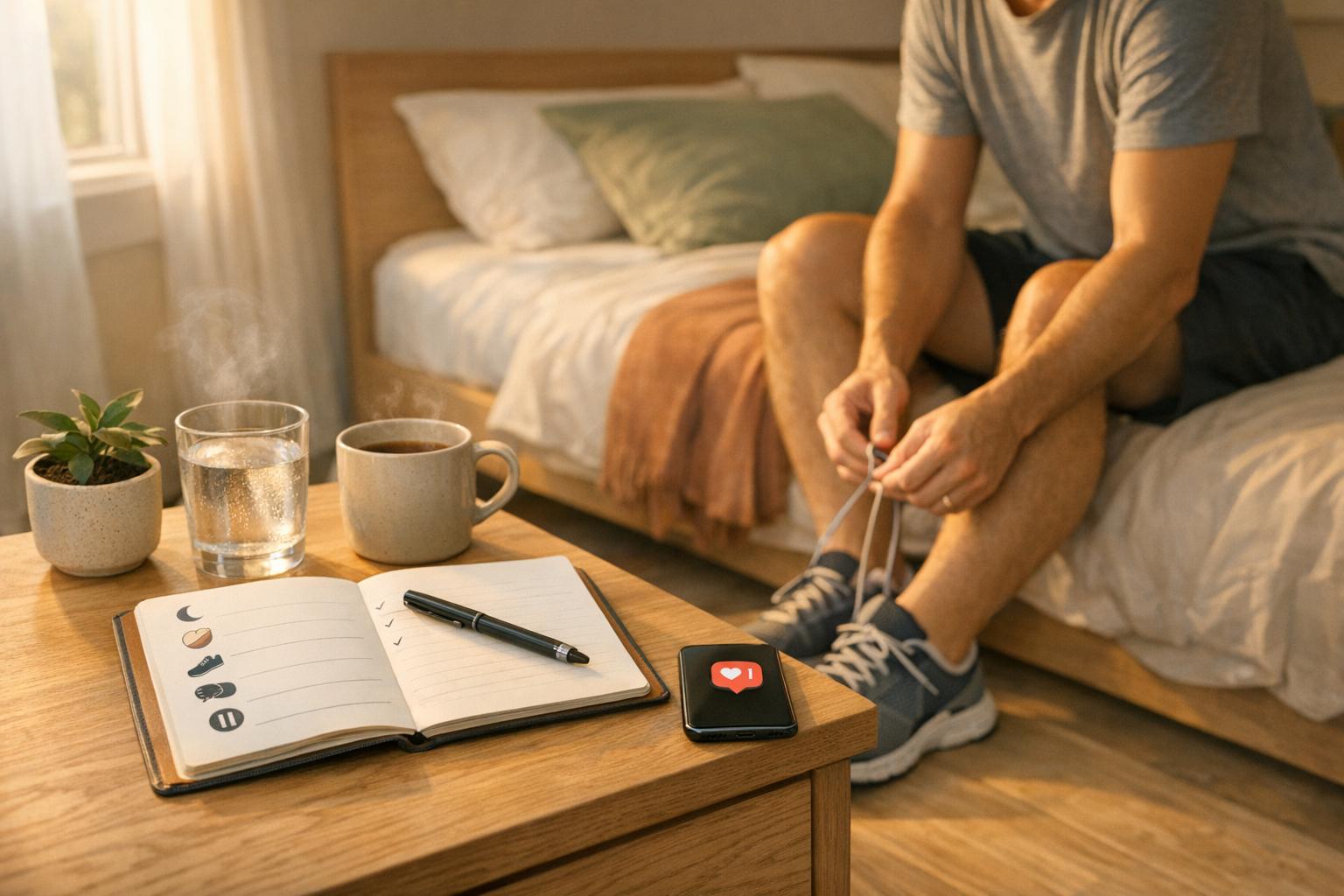
Emotional relapses after a breakup are not a sign that you’re broken or back at square one. They’re a sign that you loved someone — and that your brain is doing exactly what brains do when they lose something significant. Research from Columbia University found that social rejection activates the same brain regions as physical pain, so when a song or a smell sends you spiraling, that’s not weakness. That’s neuroscience. Here’s what actually helps when those waves hit.
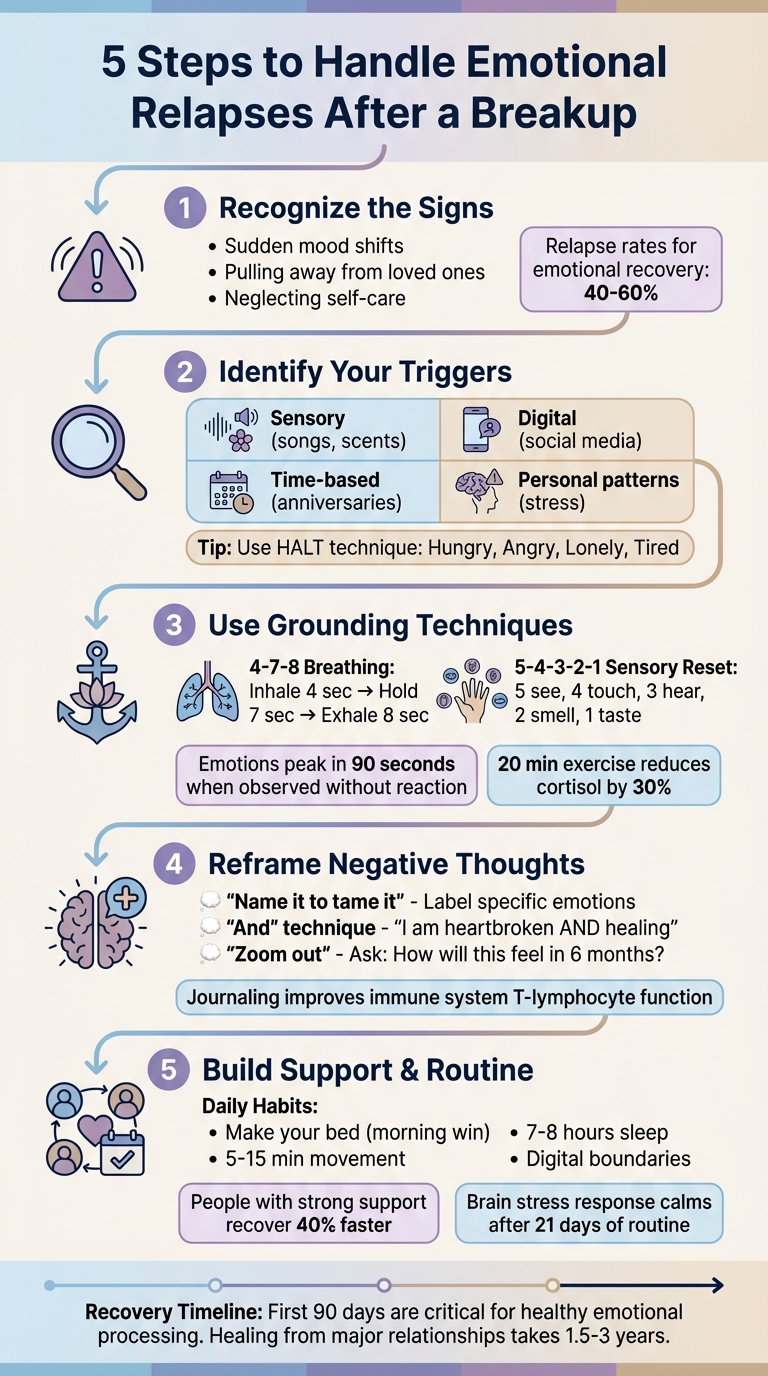
- Recognize the signs: Sudden mood shifts, pulling away from loved ones, or neglecting self-care can signal a relapse.
- Identify triggers: Common ones include sensory cues (like a song), social media, anniversaries, or stress.
- Use grounding techniques: Try breathing exercises (like the 4-7-8 method), mindfulness practices, or physical activity to stay present.
- Reframe negative thoughts: Focus on facts, not idealized memories. Journaling and self-compassion can help shift your perspective.
- Build routines: Small daily habits, like making your bed or morning stretches, create stability and emotional balance.
- Seek support: Lean on friends, family, or tools like the Stumble app to guide you through tough moments.
Recovery isn’t linear. But with these steps, you can move through emotional relapses — not around them — and come out with real clarity on the other side.
5-Step Guide to Managing Emotional Relapses After a Breakup
Why Relapsing After a Breakup Is a GOOD Sign (You Won’t Believe This)
sbb-itb-ee19e1f
How to Recognize an Emotional Relapse
The first step is learning to catch an emotional relapse before it fully takes hold. It rarely announces itself — it sneaks in through small shifts in mood, behavior, and daily habits. As the Yale Journal of Biology and Medicine puts it, “The key to relapse prevention is to understand that relapse happens gradually.” Spotting those early warning signs gives you a real chance to act before things spiral. That awareness is the foundation for getting your emotional footing back.
Emotional and Behavioral Warning Signs
Emotional warning signs often show up as sudden mood changes — anger, irritability, creeping hopelessness, or a bone-deep exhaustion that has nothing to do with how much you slept. Anxiety or emotional withdrawal, like pulling back from the people you’re usually close to, can signal that something’s off too.
Behavioral shifts are just as telling. Isolating from friends, family, or support communities — especially during the times you need connection most — is a major red flag. So is neglecting the basics: skipping meals, ignoring hygiene, missing therapy appointments. On the flip side, burying yourself in work to outrun emotional pain is another pattern worth watching. The research is pretty clear on this: relapse rates for chronic conditions — often used as a comparison point for emotional recovery — fall between 40% and 60%.
Recognizing these signs is only the beginning. Next, you need to figure out what’s actually setting them off.
How to Spot Your Triggers
Triggers are the external or internal cues that reignite grief or emotional distress. They generally fall into four categories:
- Sensory triggers: A song, a familiar scent, or anything tied to shared memories.
- Digital triggers: Social media posts — updates from your ex or mutual friends.
- Time-based triggers: Anniversaries, birthdays, or other significant dates.
- Personal patterns: Stressful situations like work pressure, financial difficulties, or health issues.
One of the most useful tools here is a trigger journal. Write down what external situation upset you, what thoughts or emotions it sparked, and how you reacted. Over time, recurring patterns become obvious. You can also try the HALT technique — check whether you’re Hungry, Angry, Lonely, or Tired. Addressing any of those states builds real resilience against triggers before they take you down.
Once you understand your triggers, you’re in a much better position to use grounding techniques and self-care strategies — which we’ll get into next.
Grounding Techniques to Use During a Relapse
When an emotional relapse hits, it can feel like your nervous system is running on overdrive. Grounding techniques work by disrupting that stress response and pulling you back to the present. They activate the parasympathetic nervous system — your body’s natural calming mechanism — to counteract the fight-or-flight reaction. Here’s something genuinely useful to hold onto: research shows that simply observing an emotion without acting on it allows the physical sensation to peak and subside within about 90 seconds.
Mindfulness and Breathing Exercises
Breathing exercises are one of the fastest ways to signal safety to your brain. A good starting point is the 4-7-8 technique: inhale for 4 seconds, hold for 7 seconds, exhale for 8 seconds. Simple — and it works almost immediately.
Another solid option is the 5-4-3-2-1 sensory reset, which shifts your focus to your immediate surroundings. Here’s how it works: identify 5 things you see, 4 things you can touch, 3 things you hear, 2 things you smell, and 1 thing you can taste. This engages your prefrontal cortex — the rational part of your brain — while calming the overactive amygdala that’s driving your emotional response.
For moments when emotions feel completely overwhelming, anchoring statements can cut through the noise. Say out loud: “My name is [Name]. I am [Age]. Today is [Date]. I am sitting in [Location]. I am safe.” It sounds almost too simple. It isn’t — it redirects your mental energy away from spiraling thoughts and back to the present moment.
Physical Activity to Reset Your Emotions
Movement is another powerful way to interrupt obsessive thoughts. Just 20 minutes of moderate exercise can lower cortisol levels by up to 30% while releasing mood-boosting neurochemicals. The type of movement matters too — match it to your emotional state.
For anger or frustration, high-intensity options like boxing or sprinting can help release pent-up adrenaline. If you’re dealing with sadness or grief, gentler activities like yoga or a walk in nature often feel more soothing. For anxiety or racing thoughts, rhythmic exercises like cycling or swimming create a meditative, calming effect.
A helpful tip: use the 5-minute rule. Commit to just five minutes of movement, even when you don’t feel like it. Often that’s enough to build momentum. As Thompson puts it:
“You’re not moving because you feel like it — you’re moving to change how you feel.”
Even a brisk 10-minute walk can reset your nervous system during a moment of panic.
Using Stumble for Anytime Grounding Support

The Stumble app offers 24/7 support — breathing techniques, sensory resets, and mindfulness practices tailored to emotional recovery — whenever and wherever you need them. Whether it’s 2:00 AM or a rough Tuesday afternoon at work, those tools are right there.
Stumble also includes a private journaling feature. Writing down your triggers, emotions, and responses helps you spot patterns and gain real clarity on what’s happening beneath the surface. Daily check-ins let you track those patterns over time and figure out which grounding techniques actually work for you.
And for those moments when you feel completely alone in it? Stumble’s anonymous community gives you a space to connect with people who genuinely understand what you’re going through — no explanation required. That blend of guided exercises, personal reflection, and peer support makes grounding far more accessible, especially during vulnerable moments.
Using Self-Reflection to Build Emotional Strength
Self-reflection can turn loss into a learning experience — and open the door to healthier relationships down the line. By examining past patterns honestly, you can start to see the dynamics that led to unhealthy connections in the first place.
The goal here is radical acceptance — acknowledging reality as it is, not as you wish it were. That shift in focus, toward what you can actually control, genuinely eases feelings of anxiety, anger, and sadness. Dr. Adam Borland from Cleveland Clinic puts it well:
“The end of a relationship is a time to reflect, clarify your values and decide what kind of life you want moving forward.”
Here’s something that might surprise you: embracing negative emotions rather than suppressing them actually contributes to better overall well-being. Research even suggests that journaling during a breakup can improve physical health by boosting the function of T-lymphocytes — a key part of your immune system.
How to Reframe Negative Thoughts
Start by noticing negative thoughts without judging yourself for having them. They’re temporary — not absolute truths. After a breakup, it’s easy to fall into mental traps like all-or-nothing thinking (“I’m unlovable”) or catastrophizing (“I’ll never find love again”). Both feel completely real. Neither is accurate.
Try the technique called “name it to tame it.” By labeling a specific emotion — saying “I feel rejected” instead of “I feel terrible” — you engage the logical part of your brain, which dials down the emotional intensity. Another approach is the “And” technique: validate your pain while also acknowledging progress. “I am heartbroken, AND I am taking steps to heal.” You can also try the “Zoom Out” method — ask yourself how significant this moment will feel in six months or five years. That perspective shift makes current distress feel less permanent.
Self-compassion matters here too. Dr. Adam Borland advises:
“I often encourage my patients to try to treat themselves the way they would treat a loved one experiencing a breakup.”
Instead of “I wasted years,” ask yourself: “What else could be true?” You might find you’ve learned exactly what qualities you need in a partner — or discovered boundaries you didn’t know you had. Focus on the facts of your relationship rather than idealized memories. As Dr. Lisa Long explains:
“Paying attention to the facts helps us stay grounded and aware of the reality of our situation. At times our mind can make a situation seem much worse than it is.”
When nostalgia creeps in, listing the actual reasons why the relationship ended can help counter the rose-tinted version your brain tends to serve up.
Journaling for Emotional Clarity
Journaling shifts focus from rumination to recovery — and the research backs this up. A study in Frontiers in Psychology found that journaling about emotional experiences reduces distress by up to 40% in acute grief (Frontiers in Psychology). That’s not a small number.
Try dividing your journal into sections like “Emotions,” “Lessons,” and “Growth.” To avoid getting stuck in negative loops, cap your journaling sessions at 15–20 minutes — or even just 5 minutes if you’re feeling particularly overwhelmed. Pay attention to physical signals too: a racing heart or chest tension might mean it’s time to pause.
Use prompts that push you toward self-discovery rather than dwelling on what happened. Questions like “What parts of myself am I excited to reclaim?” or “What did this teach me about my boundaries?” can guide you somewhere useful. For every entry about pain or loss, balance it with a note about a recovery goal or a recent win — however small.
The way you phrase things matters too. Using distancing language — writing “There is a thought that this is devastating” instead of “I am devastated” — creates a buffer between you and the emotion. It sounds subtle. It makes a real difference.
Stumble’s private journaling feature gives you a secure space to do exactly this, with daily check-ins that let you spot patterns and celebrate small wins over time.
Visualization and Cognitive Exercises
Start by visualizing three interests, values, or goals that have nothing to do with your ex. Try a Solo Decision Challenge for a week to rebuild confidence in your own judgment. Or create a Personal Vision Statement: write down three qualities you want to embody and three experiences you want to have in the next six months. Dedicating part of your journal to this “future vision” actively redirects your energy forward.
Think about it this way: research shows that breakups can influence language patterns for up to a year, with healing from major relationships often taking 1.5 to 3 years. Through self-reflection, you can reclaim your identity — rediscovering values, interests, and goals that may have gotten lost in the relationship. As Canan Gonensin puts it:
“You can’t heal what you keep pretending doesn’t exist.”
These exercises aren’t about forcing yourself to feel better or bypassing pain. They gently reshape your thinking while respecting where you actually are. And studies show that practicing forgiveness after a breakup is linked to greater happiness — not for your ex’s sake, but for yours.
Creating a Self-Care Routine for Stability
Once you’ve identified your emotional triggers and started reframing your thoughts, the next step is building a daily routine that actively supports your recovery. Why does this matter so much? Predictable habits send signals of safety to your nervous system — especially during emotionally turbulent times. They create a foundation for emotional balance when everything else feels uncertain.
Daily habits engage the prefrontal cortex, the part of your brain that manages stress and decision-making. The goal isn’t perfection — it’s anchoring your day with small, manageable actions that remind you of your own capability to move forward.
Daily Habits That Support Emotional Health
Start your morning with one simple win: make your bed. Seriously. This small act builds a sense of accomplishment and self-reliance right from the start. Follow it with some hydration and 5 to 15 minutes of light movement — stretching or walking — to release endorphins that naturally lift your mood.
Morning routines carry extra weight because cortisol, your body’s stress hormone, peaks within 30 minutes of waking up. As Sarah Thompson, author of Ahead, explains:
“The morning window matters more than evening routines because you’re essentially programming your brain’s operating system for the day.”
Pair this with a breakfast rich in protein and healthy fats to stabilize your blood sugar and avoid emotional crashes later on.
What about the times of day that feel especially empty — the hours you used to share with your ex? Fill those gaps with low-pressure activities. If weeknight dinners feel lonely, try listening to a podcast or calling a friend during that time. Set digital boundaries too: avoid social media during the first hour of your day, and put your phone in another room after 9:00 PM to limit late-night emotional spirals.
In the evening, build a calming wind-down routine. Spend 20 to 30 minutes away from screens before bed, and use that time to think of three positive moments from your day — anything counts. This retrains your brain to notice the good, counteracting its natural negativity bias. Don’t underestimate sleep either. Seven to eight hours of quality rest is genuinely essential for processing grief and maintaining emotional health.
On particularly rough days? Keep your routine minimal. Washing your face and drinking a glass of water still counts. As Dr. Adam Borland puts it:
“That structure gives you a sense of accomplishment and purpose, and it allows you to build off of small wins.”
Why Routine Helps During Recovery
When you’re healing from a breakup, consistency matters more than intensity. Regular routines help rewire the emotional centers in your brain, creating new neural pathways that associate comfort and stability with self-care — not your past relationship. Research suggests it takes about 21 days for your brain’s stress response to begin calming down after a major life disruption, making the three-week mark a good time to really lock these habits in.
Daily patterns also regulate your circadian rhythms and cortisol levels, both of which get thrown off by stress. Sarah Thompson describes routines as scaffolding:
“Think of daily routines as the scaffolding that holds you up while your emotional foundation rebuilds itself.”
To make new habits stick, link them to things you already do. After your morning coffee, step outside for five minutes of sunlight. Try habit stacking — combine a new self-care activity with an existing one, like doing light stretches while the coffee brews.
Track your progress using concrete markers like sleep quality and energy levels, rather than focusing solely on how you feel emotionally — that fluctuates too much to be reliable. Stumble’s daily check-ins help you monitor your routines and notice when things are actually improving, even before it feels that way.
Getting Support from Resources and Communities
Once you’ve established grounding techniques and a solid self-care routine, building a real support system is your next move. Here’s the thing: healing is rarely a solo endeavor. It thrives on connection. When emotional relapses hit, having the right people and resources around can be the difference between feeling completely overwhelmed and finding your footing again.
Building Your Support Network
Think of your support network as a personal “Recovery Team” — each person playing a different role. You might lean on an Emotional Validator for a listening ear without judgment, a Practical Helper for everyday tasks, a Distraction Specialist for fun activities, and a Mentor who’s been through their own healing journey and come out the other side.
The science behind this is solid. Positive social interactions release oxytocin, which lowers cortisol and reduces stress. As Sarah Thompson puts it:
“Your friends aren’t just distractions — they’re neurological medicine for your heartache.”
When you reach out, be specific about what you need. Instead of a vague “I’m struggling,” try: “I’m having a rough time and need someone to listen without jumping to advice. Can we talk?” If you need boundaries, communicate them clearly: “I just need to vent” or “I’m not ready to talk details, but I’d love some company for a movie.” Spread your needs across multiple people rather than relying on just one — it’s fairer to everyone, including you. Regular, low-pressure check-ins — a weekly coffee, a quick daily text — create real stability.
The research is pretty clear on this: according to the American Psychological Association, social support is the single strongest predictor of resilience after a major loss (American Psychological Association). And a study in the Journal of Social and Personal Relationships found that 71% of people reported their most important support during a breakup came from peer relationships — not professional help (Journal of Social and Personal Relationships). Your people matter.
If in-person support feels out of reach right now, digital tools can step in.
Using Stumble for Healing and Connection
For those late-night moments when emotions hit hardest and friends aren’t available, Stumble is built for exactly that. It offers 24/7 support through science-backed breathing exercises and cognitive techniques, tailored to intense emotional moments. The private journaling feature and daily check-ins help you process your feelings and track your progress over time — so you can actually see yourself moving forward, even when it doesn’t feel like it.
The app also includes an anonymous community where you can share your story and connect with others going through something similar. That sense of shared experience genuinely eases the isolation and self-doubt that tend to accompany heartbreak. Stumble’s approach blends human connection, self-guided practices, and on-demand tools — complementing whatever support you’re already getting from friends or professionals. As Sarah Thompson explains:
“Building a support system isn’t needy — it’s smart. Your brain is processing a genuine loss, and having the right mental health resources post breakup helps you heal faster and more completely.”
Conclusion
Experiencing emotional setbacks after a breakup isn’t a failure. It’s a natural part of the healing process — and the neuroscience backs that up. Research from Columbia University found that romantic rejection activates the same brain regions as physical pain, which means the hurt you feel is completely real (Columbia University). When those moments hit, the move is to replace self-criticism with self-compassion.
Everything in this guide works together: recognizing emotional warning signs early, using grounding techniques like the 90-second rule, reframing negative thoughts through self-reflection, building stabilizing routines, and leaning on a support network. None of these steps are magic. But combined, they give you real tools to manage overwhelming emotions and keep moving forward. As Dr. Adam Borland, PsyD from Cleveland Clinic, puts it:
“The healing process takes time. Remind yourself that a relationship breakup doesn’t define who you are as a person and that you are capable of moving forward with your life.”
Let me be honest: the early days are especially hard. A 2017 study in the Journal of Positive Psychology found that most people overestimate how long their breakup pain will last — the actual recovery window is typically around 11 weeks (Journal of Positive Psychology). That’s not a guarantee, and everyone’s timeline is different. But it’s worth holding onto when the pain feels endless.
For the late-night spirals and sudden emotional triggers, Stumble is there — grounding exercises, private journaling, and an anonymous community of people who actually get it. These tools don’t just get you through tough moments. They build lasting emotional strength. You’re not alone in this. Take it one step — or even one 90-second interval — at a time.
FAQs
How long do emotional relapses usually last?
Emotional setbacks after a breakup can linger for weeks or stretch into months — and how long really depends on the relationship’s depth and duration. On average, most people start to feel meaningfully better around the 11-week mark, but that timeline shifts for more emotionally complicated situations. Everyone’s healing looks different. Give yourself grace, and try not to measure your progress against someone else’s.
When should I get professional help for a relapse?
If emotional distress starts disrupting your daily life — your sleep, your work, your ability to function — that’s a clear signal to reach out for professional support. Watch for extended periods of sadness, intrusive thoughts, or symptoms of anxiety and depression that feel like they’re intensifying rather than easing. A trained therapist can help you process what’s happening and build strategies that actually work. Getting support early isn’t a last resort — it’s a smart move that can meaningfully speed up your healing.
How do I stop social media from triggering me?
Start by blocking or muting your ex’s accounts — don’t make it easy for yourself to check in on them. That boundary alone removes a major source of emotional setbacks. From there, replace scrolling time with grounding activities: spend time with friends, get into a hobby, or try something new. A 2021 study in PLOS ONE found that limiting social media use to 30 minutes daily reduced loneliness scores by 25% (PLOS ONE) — so cutting back isn’t just good advice, it’s backed by real data. Social media feeds into an addictive cycle at the best of times. Right now, less is genuinely more.
Related Blog Posts
- What to Do When You Miss Your Ex: 8 Healthy Steps
- Breakup Recovery Checklist: 15 Steps to Heal
- How Breakups Lead to Personal Growth
- Common Setbacks in Routine Recovery and How to Handle Them
STUMBLE APP
Ready to start healing?
Stumble gives you the community, tools, and support to move forward — free on iOS.
Download the app free →
Tagged with :