
When your ex contacts you, it can stir up a mix of emotions – excitement, confusion, or even anxiety. Reacting impulsively can disrupt your healing process, so staying calm and thoughtful is key. Here’s a quick guide to help you stay grounded:
- Pause Before Responding: Take 10–15 minutes (or longer) to process your emotions before replying. This prevents impulsive decisions.
- Check Your Intentions: Reflect on why you want to respond. Is it for closure, validation, or genuine connection? Write a "Reasons It Ended" list to stay clear-headed.
- Use Grounding Techniques: Practice deep breathing, mindfulness, or physical grounding (like holding an ice cube) to manage emotional waves.
- Focus on Yourself: Redirect your energy into hobbies, goals, or self-improvement activities. Journaling can help organize your thoughts.
- Set Boundaries: If you choose to reply, keep it brief and neutral. Use statements like, "I need space to focus on myself."
- Lean on Support: Talk to trusted friends, join anonymous communities, or use apps with grounding exercises for extra help.
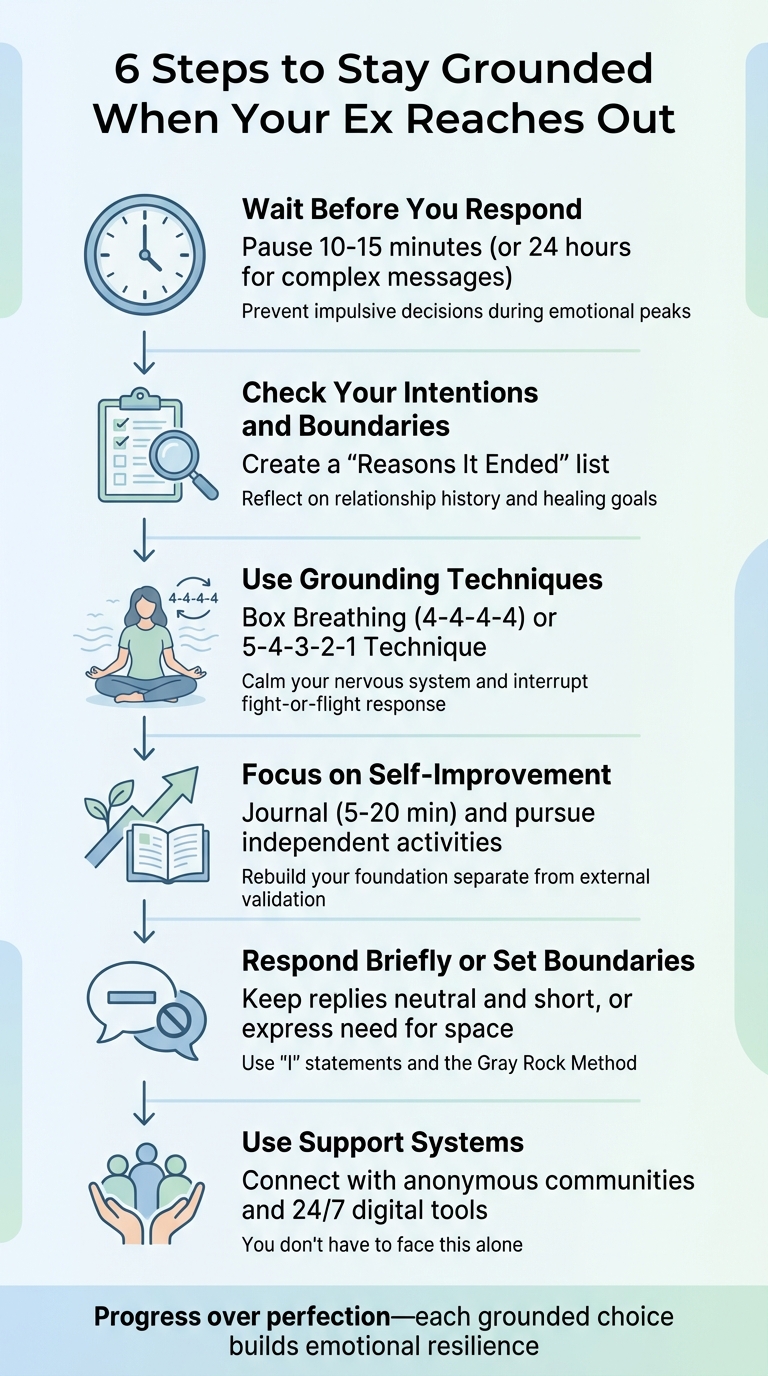
6-Step Guide to Stay Grounded When Your Ex Reaches Out
Step 1: Wait Before You Respond
Create a Response Delay
The first step to maintaining your progress is simple: pause before you respond. When an unexpected message pops up, your body releases stress hormones, urging you to react immediately. But here’s the thing – you’re most likely to make impulsive decisions in the first 10 to 15 minutes after receiving such a message. Instead of diving in, set a timer on your phone and commit to not checking it during that time. Better still, place your phone somewhere out of reach.
As Sentari puts it:
"Breaking no contact is not a slip; it’s a reset button on your healing journey".
For messages that feel particularly complex or emotionally charged, consider extending this pause to a full 24 hours. Studies suggest that on days when people reconnect with their exes, they often experience heightened feelings of both love and sadness. This brief dopamine rush might feel rewarding in the moment, but it comes with emotional costs that are easier to recognize after taking a step back.
Recognize Your Initial Emotions
Once you’ve given yourself some time, take a moment to identify your feelings. It’s completely normal to feel a mix of emotions – maybe excitement, confusion, or even hope – when you hear from an ex. This reaction is your brain’s way of responding to withdrawal, flooding you with emotions. That overwhelming urge to reply? It’s just your nervous system doing its job.
Try naming your emotions out loud, like saying, "I feel anxious and hopeful right now." This small act helps create a sense of distance between you and those intense feelings. As Lindsey Pratt, LMHC, wisely advises:
"Try to pause before replying – it will help you gather your thoughts and become less reactive in your reply".
Taking these steps can help you approach the situation with clarity rather than emotion.
sbb-itb-ee19e1f
What To Do When Your Ex Reaches Out
Step 2: Check Your Intentions and Boundaries
After giving yourself time to process your feelings, shift your attention to understanding your motives and setting clear boundaries.
Review the Relationship History
Before you hit send, take a moment to reflect on why the relationship ended in the first place. Nostalgia has a way of distorting reality, so grounding yourself in the facts can help. Try creating a "Reasons It Ended" list. Write down the red flags you may have ignored and the behaviors that left you feeling undervalued. If you notice those same red flags reappearing in vague or inconsistent messages, it could point to recurring patterns.
Reconnecting with an ex often stirs up unresolved dynamics from the past. For example, if your needs were dismissed before, a casual "hey" from them isn’t likely to change that dynamic. This kind of reflection builds on the pause you took earlier and ensures that any decision you make supports your healing process. Interestingly, research suggests that the urge to respond to an ex can feel more like withdrawal – similar to addiction – rather than a genuine desire for healthy reconnection. As Olivia Guy-Evans, MSc, Associate Editor for Simply Psychology, explains:
"You should aim to approach your ex from a position of worth and wholeness… reconnecting with an ex means that old patterns are likely to resurface".
Identify Your Current Healing Goals
Take a moment to ask yourself: Are you reaching out to grow, or are you trying to avoid pain? If your desire to respond comes from a place of loneliness, anxiety, or a need for validation, try applying the "Ache Test." This can help you determine whether your intentions are about healthy reconnection or simply a way to soothe post-breakup pain. If you feel you can reply without expecting reconciliation or closure, it may be a sign that you’re prioritizing personal growth.
Another helpful strategy is the "Fake Text" method. Write out your message in a notes app but don’t send it. If the sense of urgency fades after doing this, it’s likely that your impulse was more about emotional release than a true desire to reconnect. Keep in mind that closure is something you create for yourself – it’s not something your ex can deliver in a text.
It’s also worth noting that around 73% of the urges to contact an ex happen outside standard business hours – late at night or during lonely weekends – when emotions are heightened. If your emotional intensity feels like it’s above a 5 on a scale of 0–10, it’s probably best to wait before making any moves.
Step 3: Use Grounding Techniques
Once you’ve assessed your intentions and set boundaries, it’s time to manage the emotional wave that can come from an ex’s message. Grounding techniques are practical tools that help interrupt your body’s automatic "fight or flight" response. This response releases stress hormones like adrenaline and cortisol, which can heighten your emotions. These methods don’t push your feelings aside – they create space between the trigger and your reaction, allowing you to respond thoughtfully.
Try Mindfulness and Deep Breathing
One quick way to calm your nervous system is through Box Breathing. This involves inhaling for 4 seconds, holding for 4, exhaling for 4, and holding again for 4. If you prefer something less structured, try 4-7-8 Breathing: breathe in for 4 seconds, hold for 7 seconds, and exhale for 8 seconds. As Sarah Thompson from Ahead explains:
"Make your exhale longer than your inhale to signal safety to your brain".
This extended exhale activates your parasympathetic nervous system, signaling to your body that there’s no immediate danger.
Another effective tool is the 5-4-3-2-1 Technique, which helps anchor you in the present moment. Identify 5 things you can see, 4 you can touch, 3 you can hear, 2 you can smell, and 1 you can taste. Research suggests that mindfulness techniques like this engage areas of the brain tied to emotional regulation, helping you regain stability during intense moments.
Use Tools for Emotional Regulation
Sometimes, physical sensations can help break the cycle of overwhelming thoughts. For instance, try cold stimulation by holding an ice cube in your hand or splashing cold water on your face. This activates the vagus nerve, which helps calm your nervous system and disrupt obsessive thinking patterns. Another option is the Butterfly Hug: cross your arms over your chest and gently tap your shoulders in an alternating rhythm while focusing on your breath. This technique can help release physical tension and bring a sense of calm.
Consider creating a grounding toolbox filled with items that bring you comfort, like a smooth stone, lavender essential oils, or photos of places that make you feel safe. Digital tools can also be helpful – apps like Stumble provide 24/7 guided grounding exercises and mood tracking to help you navigate emotional highs and lows. Having a variety of strategies ready ensures you’re prepared to handle emotional surges when they happen.
Step 4: Focus on Self-Improvement
Once you’ve grounded yourself emotionally, it’s time to channel that energy into rebuilding your sense of independence. Shifting your focus from external validation to personal growth lays the groundwork for lasting confidence and resilience. As Sarah Thompson puts it:
"Self-improvement post breakup isn’t just about feeling better – it’s about rebuilding the foundation of who you are, independent of anyone else’s approval or presence in your life."
This isn’t about rushing to "move on." Instead, think of this as an opportunity to reconnect with your values, interests, and goals – things that may have taken a backseat during the relationship. The key is to distinguish between healthy actions, like learning a new skill or exercising, and unhealthy distractions, such as endlessly scrolling through social media. A great way to process this transition is by putting pen to paper.
Journal and Reflect
Writing can help turn emotional chaos into clarity. When you journal, you’re engaging the prefrontal cortex – the part of your brain responsible for reflection and emotional regulation – rather than letting reactive emotions take over. This process can help you work through unresolved feelings and free up mental space for growth.
One simple yet powerful technique is the "Journal, Don’t Send" method. When you’re tempted to reach out to your ex, write a letter instead. Use it to vent all your thoughts – regrets, anger, or sadness – but keep it private. Platforms like Stumble even offer secure journaling tools to support this practice. For added structure, try dividing your journal into three sections: "Emotions" (to acknowledge how you feel), "Lessons" (to reflect on what you’ve learned), and "Growth" (to focus on how you’re evolving).
To avoid overthinking, limit your journaling sessions to 5–20 minutes. Balance entries that explore painful emotions with notes on progress, like rediscovered hobbies or new goals. Reviewing your entries monthly can help you track triggers and celebrate how far you’ve come. While reflection is essential, taking action is equally important for regaining your independence.
Do Progress-Focused Activities
Channel your emotions into activities that actively support your growth. The Three Pillars Exercise is a helpful tool: identify three interests, values, and goals that are entirely your own, separate from your past relationship.
Physical movement is another great way to break free from ruminative thoughts. Activities like walking, stretching, or even dancing release endorphins and lower cortisol levels, helping you reset emotionally. For one week, try making all decisions independently, even small ones, to break old habits of relying on someone else. Simple daily actions, like visiting a new coffee shop or dedicating 15 minutes to a hobby, can reinforce your sense of self.
Learning something new – whether it’s a language, a musical instrument, or a professional skill – keeps your mind engaged and adds value to your future. Stumble’s guided healing paths can provide structure, offering daily check-ins and progress tracking to keep you on course. These steps not only strengthen your independence but also protect the emotional boundaries you’ve worked hard to establish.
Step 5: Respond Briefly or Set Boundaries
Now that you’ve built a stronger emotional foundation, it’s time to decide how to handle communication if your ex reaches out. The key is to maintain the emotional progress you’ve made while addressing the situation with clarity and respect. Whether you choose to respond or not, the focus should be on protecting your well-being – not reopening old wounds or getting drawn into lengthy exchanges.
Keep Communication Neutral and Short
If you decide to reply, keep your message brief and emotionally neutral. The Gray Rock Method can be helpful here, as it emphasizes short, plain responses that avoid giving your ex any emotional leverage.
Dating coach Connell Barrett advises:
"Keep your reply polite but businesslike – avoid emojis. This gives a subtle but clear hint that you aren’t interested".
Avoid asking follow-up questions like "How are you?" or "What’s new?" – these can unintentionally restart conversations you might not be ready to have. If the message you receive is vague or low-effort (like "Hey" or "What’s up?"), you’re under no obligation to respond.
Here are a few neutral responses you can adapt:
- "Thanks for reaching out. I’m okay."
- "I appreciate your message, but I need space."
- A simple "Okay" or "Got it."
Only respond to practical matters, and let silence handle the rest.
If replying doesn’t feel right, you can take a more direct approach by setting clear boundaries.
Express Your Need for Space
When it comes to boundaries, be firm and prioritize your healing. Therapist Meg Josephson, LCSW, emphasizes:
"Know that you are under no obligation to respond… The amazing part of being out of the relationship is that you are only responsible for doing things that work for YOU, without regard to how it feels to them".
Use "I" statements to express your needs without placing blame, which can help avoid unnecessary conflict. For example:
- "I need space to process everything. I’ll reach out when I’m ready."
- "I appreciate your message, but I am not interested in rebuilding our relationship right now."
If your ex sends an affectionate message after weeks of no contact, you could respond with:
"When you send affectionate texts, I’m unsure how to respond. We haven’t been close for a while now".
Another helpful tool is the Pause Rule: wait at least an hour – or even up to a day – before replying. This gives you time to reflect and respond thoughtfully, or decide not to respond at all. In fact, a poll of 756 people who received gifts from an ex after a breakup found that 66% believed ignoring them was the best approach. Sometimes, silence speaks louder than words and helps you stay grounded.
Step 6: Use Support Systems
You don’t have to face this alone. When an ex reaches out, it can stir up a whirlwind of emotions that feel hard to manage. Strong social connections can help cushion the impact of stress, anxiety, and even depression. Leaning on the right support systems can make all the difference in staying steady. Here’s how you can tap into these resources effectively.
Connect with Anonymous Communities
Sometimes, opening up to friends or family doesn’t feel like the right move. Maybe you’re worried about being judged or feel like you’ve already leaned on them too much. That’s where anonymous communities can play a vital role. Online platforms offer a safe, judgment-free zone where you can share your thoughts and struggles without the fear of social consequences.
The beauty of these communities lies in their ability to validate your feelings. Hearing from others who’ve navigated similar situations reminds you that you’re not alone – and that realization can be incredibly grounding. Studies even show that a lack of supportive community ties can triple the risk of severe depression.
Take Stumble’s constellation-based community, for example. It’s designed to be anonymous, allowing you to open up without hesitation. Whether you’re trying to process a cryptic message from your ex or just need someone to remind you why you’re prioritizing your healing, connecting with others on the same path can help you stay focused. This kind of support not only reinforces your emotional progress but also complements earlier strategies for staying grounded.
Get 24/7 Grounding Support
Even with a strong community, there will be moments – often late at night or during quiet hours – when the urge to respond to your ex feels overwhelming. That’s where digital wellness tools come in to provide immediate support. While they’re not a replacement for human connection, these tools can be a lifeline during those tough moments.
Apps like Stumble offer round-the-clock grounding features tailored for situations like these. Whether it’s guided breathing exercises, private journaling to safely process your emotions, or even a "fake texting" feature that lets you draft a message to your ex without actually sending it, these tools provide healthy outlets for intense feelings. They help regulate your emotions and give you the space to refocus.
The American Psychological Association emphasizes the value of having emotionally supportive people who remind you of your strengths and help you concentrate on your next steps. By combining human connections with digital tools, you create a well-rounded safety net. Stumble’s daily reminders and guided healing content are designed to keep you moving forward, even when your ex unexpectedly re-enters your world.
Common Mistakes to Avoid
When your ex reaches out, it’s easy to fall into impulsive reactions. These might feel comforting for a moment, but they often lead to anxiety and regret. Quick responses give a fleeting sense of relief by temporarily numbing the pain, but they can set back your healing process significantly.
In contrast, grounded strategies focus on long-term recovery. They rely on techniques like pattern interruption and cognitive behavioral principles to break cycles of obsessive thinking and emotional reactivity.
Reactive Responses vs. Grounded Strategies
Here’s a breakdown of how impulsive reactions differ from more mindful, grounded approaches:
| Feature | Reactive Responses | Grounded Strategies |
|---|---|---|
| Primary Action | Immediate replies, lengthy emotional messages, or "bait" texts aimed at provoking a reaction. | Delayed responses (hours or days), neutral and concise communication, or intentional silence. |
| Emotional Driver | Fear of being forgotten, loneliness, or a "fight-or-flight" instinct. | Self-respect, clarity, and dedication to personal healing. |
| Communication Tone | Defensive, pleading, or emotionally vulnerable in an inconsistent way. | Calm, measured, and detached, addressing imbalances without over-investing. |
| Immediate Impact | A brief dopamine boost followed by regret, anxiety, and self-blame. | Lower stress, increased sense of control, and emotional stability. |
| Long-term Outcome | Prolongs attachment, resets healing progress, and gives emotional power to the ex. | Builds emotional strength, fosters independence, and protects peace of mind. |
Understanding these differences can help you make choices that support your recovery instead of hindering it. By shifting from reactive to grounded strategies, you reinforce the importance of deliberate, mindful responses. As Sentari wisely puts it:
"True emotional detachment isn’t the absence of memory; it’s the absence of pain when those memories arise."
Every time you opt for a grounded approach over an impulsive reaction, you take another step toward genuine emotional detachment and healing. One choice at a time, you regain your peace and power.
Conclusion
When your ex reaches out, the goal is progress – not perfection. Each time you take a moment to pause before responding, practice a grounding technique, or uphold a boundary, you’re breaking free from the emotional cycles that romantic attachment can create. These small victories add up, helping you reclaim your emotional balance.
The six strategies – pausing before responding, clarifying your intentions, grounding your emotions, focusing on self-growth, setting firm boundaries, and leaning on support systems – are more than just coping tools. They’re a framework for regaining your power and building the life you deserve after heartbreak.
Grounding techniques, like a quick breathing exercise or a few minutes of journaling, help you interrupt your nervous system’s automatic reactions and bring your rational mind back into play.
Support systems are just as crucial. They provide a safety net for those moments when emotions feel overwhelming. Apps like Stumble offer resources like 24/7 grounding exercises, private journaling, and guided healing content to help you navigate unexpected emotional challenges. With features such as daily check-ins and an anonymous community, you have access to the support you need, exactly when you need it, without the pressure of formal therapy or dating.
Healing is a deeply personal journey. Every setback is a chance to strengthen your recovery. Each grounded decision builds your emotional resilience and brings you closer to genuine detachment. Stay committed to the process, trust the strategies that resonate with you, and lean on the tools and support systems available when the path feels tough. Every step forward is a step toward the life you deserve.
FAQs
Should I respond at all?
Deciding whether to reply is a personal choice that hinges on your feelings and goals. Take a moment to pause and think things through before making a decision. Reacting impulsively can sometimes stir up old pain or lead to misunderstandings. If you’re feeling uncertain or emotionally fragile, choosing not to respond might help you uphold your boundaries and safeguard your mental health. In the end, prioritize what supports your healing and emotional stability.
How do I know my intentions are healthy?
When considering your motivations, take a moment to reflect on what’s driving your actions and how you’re feeling emotionally. Healthy intentions usually come from a place of self-care, personal clarity, and a desire to grow – not from seeking external validation, acting out of revenge, or holding onto unresolved attachments. Ask yourself: Are you trying to find closure? Are you aiming to set boundaries? Or are you hoping to reconnect in a way that’s respectful and genuine?
If your actions are rooted in self-awareness and a focus on healing, they’re more likely to lead to positive outcomes. Tools like journaling or using support apps can be incredibly helpful in keeping your intentions aligned with emotional growth and self-respect. They allow you to process your feelings and ensure you’re moving forward in a way that’s healthy for you.
What if their message triggers a panic spiral?
If their message sends you into a panic spiral, it’s important to focus on grounding yourself to regain control over those overwhelming emotions. Try simple techniques like observing your surroundings – what can you see, hear, or touch? These small actions can help anchor you in the present moment. Take a pause, breathe deeply, and remind yourself that these intense feelings are temporary. Be kind to yourself by acknowledging your emotions with understanding. Saying something like, "This is painful, and that’s okay," can help you navigate the moment without letting the spiral take over.
Related Blog Posts
- What to Do When You Miss Your Ex: 8 Healthy Steps
- Breakup Recovery Checklist: 15 Steps to Heal
- 5 Steps to Set Boundaries After a Breakup
- How to Handle Emotional Relapses After a Breakup
STUMBLE APP
Ready to start healing?
Stumble gives you the community, tools, and support to move forward — free on iOS.
Download the app free →
Tagged with :